
By Katrijn Geerts
How a Chinese railway is changing Laos’s relationship with time
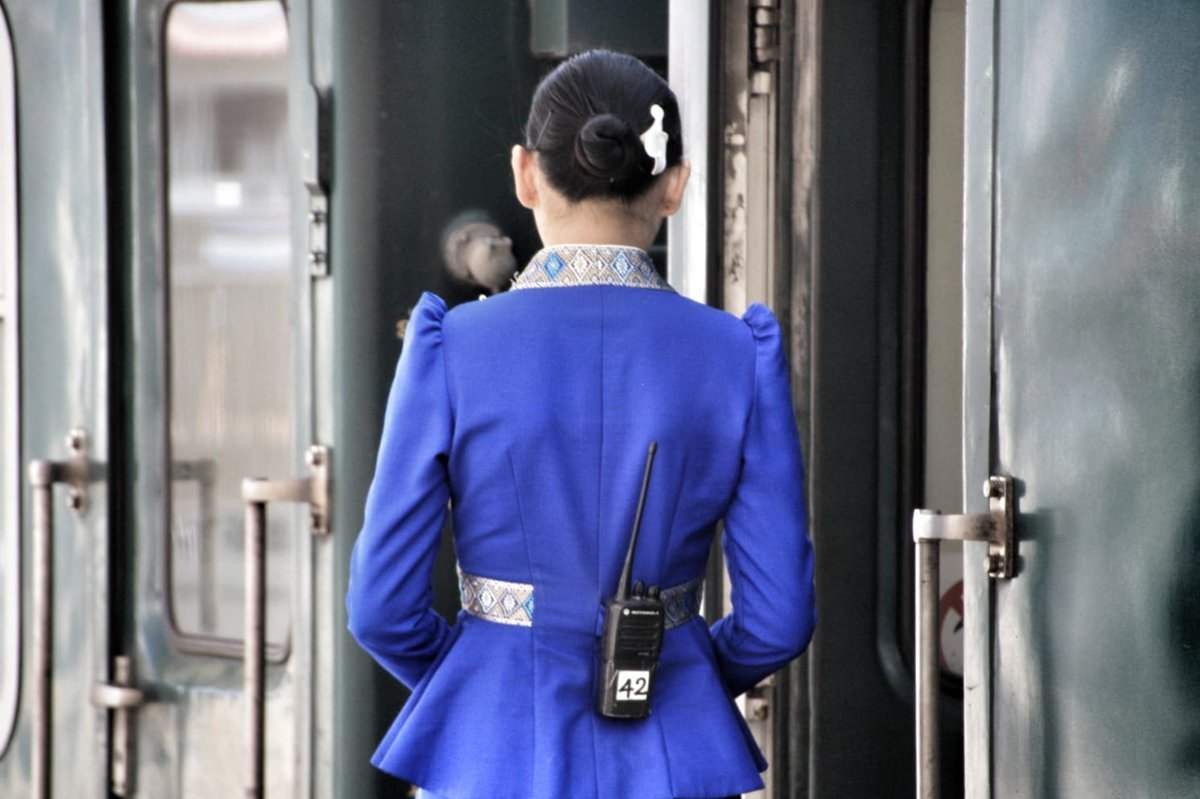
The train arrives on time. Inside, the air conditioning hums softly, passengers sit quietly in their seats and staff move with the precision of a well-rehearsed routine. Before boarding, everyone passes through security checks. Everything feels orderly, efficient and distinctly modern.
Outside, Laos unfolds at a different pace.
Rice fields stretch towards distant hills. Small villages appear beside the tracks, their houses standing in the shadow of a railway that has transformed the way people can move through the country. In just a few hours, the train connects places that once required long, exhausting journeys. What used to take most of a day can now be completed before lunch.
For Laos, one of Southeast Asia’s least developed countries, the railway represents more than a faster way to travel. It is a promise of progress.
Yet travelling through Laos by train also raises a question: what happens when speed enters a country where life has long been shaped by distance, rivers and waiting?
A country on the move
The Laos–China Railway opened in December 2021, linking the capital, Vientiane, with the northern city of Luang Prabang and continuing towards the Chinese border. Built as part of China’s wider Belt and Road Initiative, the line has brought Laos closer to its powerful northern neighbour and made parts of the country more accessible to travellers and traders.
On board, the future seems tangible. Families travel to visit relatives, students move between towns and tourists head north to explore landscapes that were once difficult to reach. The railway has opened new possibilities, and its benefits are visible in the movement of people.
But the modern stations can feel strangely disconnected from the communities around them. The train rushes through rice fields and past modest homes, while reaching a station can still require a separate journey. The infrastructure crosses the country, but not everyone has equal access to the speed it offers.
For some, progress is passing right outside the window.
The river keeps its own time
A few days earlier, I travelled north along the Mekong River by slow boat. The journey took two days, a world away from the precision of the railway.
The boat was crowded. Although passengers had booked tickets, extra white plastic chairs had been squeezed into the space, leaving families sitting close together, some near the engine room. The motor roared and filled the air with smoke. Then it failed. We transferred to another boat, only for the journey to be interrupted again.
At one point, the boat ran aground on a sandbank. Men stepped into the shallow water and pushed with long poles. We waited, watching the river and the people working to move us forward.
Along the banks, life continued. People appeared with plastic bags, boarding where they could. The river was not simply a scenic backdrop for tourists; it remained a route connecting communities, carrying people and goods between places that roads and railways do not always reach.
There was no reliable internet to distract me. Waiting became unavoidable. At first, every delay felt like a disruption. Gradually, the journey began to demand something different: patience, attention and an acceptance that not everything could be controlled.
In a world increasingly organised around efficiency, the river offered a different measure of time.
Small journeys, bigger changes
In Laos, the contrast between the two journeys is not simply a story of old versus new. The slow boat can be uncomfortable and unpredictable; the railway can make essential journeys faster and easier. For people who need to reach family, education or work, saving hours can make a real difference.
One encounter stayed with me. I met a boy who had travelled for around six hours to Luang Prabang to buy Coca-Cola and sweets. He stayed overnight with a friend and planned to return the following day. Dressed neatly, with his hair carefully gelled, he smiled as we spoke. He shared some of his peanuts with me, offering what he had.
His journey was a reminder that mobility is not an abstract measure of development. It shapes the small freedoms of everyday life: what people can buy, whom they can visit and how far they can travel for something as ordinary as a drink or a packet of sweets.
The railway may change these possibilities. But its impact depends on who can afford to use it, how easily people can reach its stations and whether the economic benefits extend beyond the main destinations.
The price of speed
The railway is also part of a much larger economic relationship. Its construction came at a substantial cost, and Laos has faced mounting debt and growing dependence on China. The line is often presented as a gateway to economic transformation, connecting the country to regional markets and encouraging tourism and trade. But infrastructure on this scale also carries financial risks.
Speed, in other words, comes on credit.
The challenge is not whether Laos should modernise. Better connections can create opportunities in a landlocked country where distance has long been an obstacle. The question is who ultimately benefits from the investment, and who bears its cost.
A train can shorten the journey between two cities without automatically making life easier for everyone living between them. Economic growth measured in new tracks and faster connections does not necessarily reveal what happens in the villages beside the railway.
Development moves at different speeds, too.
Between two rhythms
In the evening, the small riverside town of Pakbeng comes alive as slow boats arrive. Passengers step ashore, guesthouses fill and restaurants prepare for the night. By morning, when the boats depart, the town quietens again. Its rhythm is tied to the river and to the people moving along it.
The railway offers another rhythm: precise departures, controlled stations and journeys measured in hours rather than days. Neither tells the whole story of Laos.
As the train sped north, I thought of the people beside the tracks, the passengers waiting on the river and the boy who had travelled so far for something so simple. Their lives do not fit neatly into a narrative of progress or decline. They are adapting, finding opportunities and negotiating the changes unfolding around them.
Laos is moving towards a more connected future. But the Mekong still flows at its own pace, carrying the traces of a way of life that cannot be measured in timetables alone.
Perhaps the real question is not how quickly Laos can move forward, but whether everyone will be able to move with it.
Katrijn Geerts is a graduate of the Master in Travel Journalism at the School of Travel Journalism. If this piece inspired you, take a look at our Master in Travel Journalism and our Master in Gastronomic Journalism and Communication, watch our students’ travel documentaries on YouTube and listen to their stories on our podcast on Spotify.
Katrijn Geerts wrote this article for Travel & Create as part of her Final Master’s Project on the Master in Travel Journalism at the School of Travel Journalism.