
By Mónica Romero
“Costa da Morte” series · Part 1 of 10. A series by Mónica Romero, written as part of her final project for the Master in Travel Journalism at the School of Travel Journalism (2026).
Costa da Morte is one of those places full of stories to tell. Its name alone is enough to spark curiosity and the urge to go and see it for yourself.
Here, the Galician land does not end quietly. It breaks. It twists between capes, inlets, open beaches and granite walls that hurl themselves towards an Atlantic that is almost never calm. And right at the points where the continent seems to hesitate before vanishing under the water, the lighthouses appear.
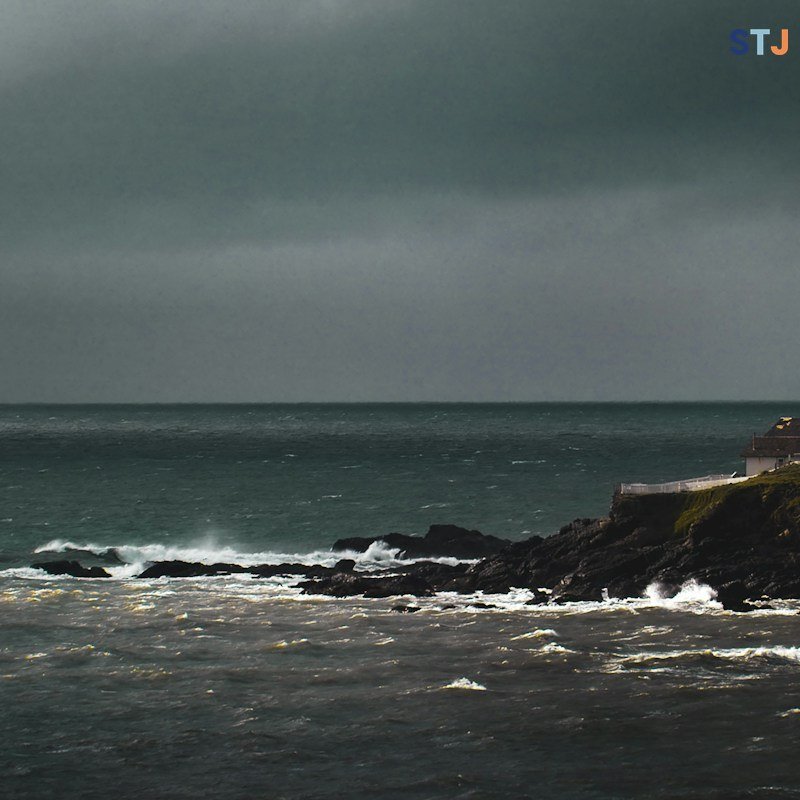
They are not there by chance. They are the result of centuries of sailing along a difficult coast, battered by storms, fog, rocky shoals and currents. Today we photograph them at sunset; for generations, their light meant something far less romantic: knowing where the danger was.
Travelling along the lighthouses of Costa da Morte is, therefore, like following a dotted line between beauty and fear.
From Malpica to Fisterra stand some of the most spectacular lighthouses in Galicia. The regional tourism board, Turismo de Galicia, identifies eight major landmarks on this route: Sisargas, Punta Nariga, O Roncudo, Laxe, Cabo Vilán, Punta da Barca, Touriñán and Fisterra.
The first has something unreachable about it. The lighthouse on the Sisargas Islands rises opposite Malpica, separated from the mainland by an arm of ocean. You cannot simply park and walk up to it: the islands can only be reached by sea, which preserves the frontier feeling that some lighthouses still have.
Punta Nariga is very different. It came into service in 1998, and its architecture, designed by César Portela, recalls the bow of a ship advancing into the ocean. It is a contemporary lighthouse, yet it seems to understand perfectly where it has landed: granite, wind and horizon.
Then comes O Roncudo. The name says it all: it comes from the hoarse roar of the sea as it breaks against the rocks. Goose barnacles grow precisely where the Atlantic strikes hardest, and several crosses remember the percebeiros, the barnacle gatherers who lost their lives working in front of the sea. No legend is needed for this landscape to command respect.
On the other side of the estuary stands the Laxe lighthouse, gentler in appearance, with views that stretch from O Roncudo to the coast of Camariñas.
And then comes Cabo Vilán.
There are pretty lighthouses, and there are lighthouses with presence. Vilán is one of the imposing ones. Its granite tower seems to be part of the mountain, rising in front of an ocean that witnessed some of the most dramatic shipwrecks on this coast. In 1896 it became the first lighthouse in Spain to run on electricity.
Further south, Muxía offers a completely different picture. The small Punta da Barca lighthouse shares the stage with the sanctuary of A Virxe da Barca and with giant stones steeped in legend. Here, landscape, religion and popular tradition practically merge.
Next comes Touriñán, probably the loneliest of them all. It stands at the westernmost point of mainland Spain and, during certain weeks in spring and late summer, it is one of the places from which you can watch the last sunset in continental Europe.
And finally, Fisterra.
Its lighthouse has been working since 1853 and stands 138 metres above sea level. For centuries this cape fed the idea of standing at the very edge of the known world.
Today we know perfectly well what lies on the other side.
The Americas, miles of ocean, trade routes, submarine cables, planes and satellites.
But there is something that maps still cannot explain.
When you stand in front of the Atlantic as evening falls, with the lighthouse beam beginning to turn while the sun disappears, it is surprisingly easy to understand why, for centuries, people believed the world ended here.
Perhaps that is why we keep coming back.
Not to discover where the land ends, but to remember how small we are when the sea begins.
This article is part of Mónica Romero’s final project for the Master in Travel Journalism at the School of Travel Journalism.
Mónica Romero wrote this piece as the final project of her training at the School of Travel Journalism. If it inspired you, take a look at our Master in Travel Journalism and our Master in Gastronomic Journalism and Communication, watch our students’ travel documentaries on YouTube and listen to their stories on our podcast on Spotify.
Next instalment (6 November): A 3–5 Day Lighthouse Route Along Costa da Morte: Scenic Itinerary, Stops and Experiences →
All parts of the “Costa da Morte” series
- 1. The “End of the World” Lighthouses of Costa da Morte: Where the Map Ends and the Atlantic Begins (you are here)
- 2. A 3–5 Day Lighthouse Route Along Costa da Morte: Scenic Itinerary, Stops and Experiences
- 3. The Shipwrecks That Named Costa da Morte: 8 True Stories and What Remains of Them Today
- 4. Cabo Vilán: The Light Born of Fear and Storms
- 5. Fisterra: The Lighthouse at the End… and the Beginning of Many Lives
- 6. Touriñán at Sunset: The Ritual of the Last Light
- 7. The Lighthouse Keeper’s Life: From Isolation to Automation
- 8. Coastal Legends: Raqueiros, Stones with Memory and Other Tales Still Told
- 9. 12 Costa da Morte Viewpoints for Breathtaking Sunsets
- 10. Photographing Lighthouses and Storms on Costa da Morte: Gear, Safety, Framing and Golden Hours