
By Èric Frigola
An official label sets out to protect the country’s culinary tradition, but it raises questions about how roots and authenticity are defined in times of change.
While researching local produce and restaurants in Andorra, I came across a label that seemed to say far more than it showed: «Restaurant de Cuina Tradicional d’Andorra», created to distinguish establishments that cook dishes from the national culinary corpus using local ingredients. At first sight it may look like a simple tourism marketing tool, but behind it lies a much deeper debate about the identity and evolution of Andorran cooking.

The label grew out of an ambitious project: a culinary corpus of 438 recipes, 120 of which belong to what is called the country’s living gastronomic heritage. With it, the Andorran government seeks to recognise and protect a shared culinary tradition rooted in the land and in local produce. In practice, however, that desire to preserve inevitably raises a question: to what extent can «Andorran cooking» be defined by decree?
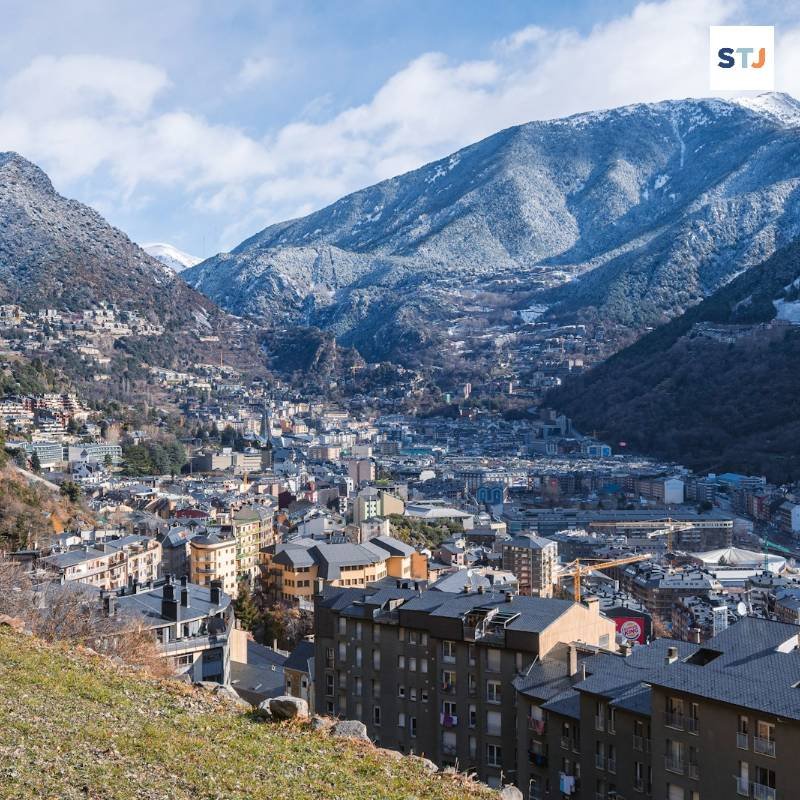
The rules are very specific: restaurants must offer at least five traditional dishes made with local ingredients and avoid «exotic ingredients with place names from outside the Pyrenees». It’s understandable: the aim is to safeguard an identity and prevent cultural dilution.
Yet gastronomy, like any living expression, changes with the people who practise it. Under the brand «Productes agrícoles i artesans d’Andorra» you’ll find beers and chocolates made to offer a quality local product that in no way reproduces an old legacy tied to the country’s traditions, as cured sausages or ratafia might. Does that make them any less authentic? Perhaps not. Maybe their authenticity lies not in where the ingredients come from, but in the act of rooting them, of making them speak to the place. After all, identity isn’t only inherited; it is also built.
What the label certifies and what is actually cooked
These thoughts about what is ours and what is foreign gain weight when you browse the restaurant listings of Andorra Tourism. Some establishments appear under «Andorran cuisine», while others with similar menus are listed as «mountain cuisine» or «home cooking», categories that, without saying so, may include equally traditional dishes. This suggests a possible disconnect between what the institution certifies and what is really cooked, beyond global trends and influences or the coexistence with international restaurants.
There are also interesting contradictions around the idea of local produce. Traditional cured sausages such as donja or bringuera used to be made from the pigs each family raised; today they are made from animals that may be locally reared but are not native breeds. Things get even more complicated with local chocolate, since cacao obviously isn’t grown in Andorra or anywhere in the neighbouring Pyrenees.
For these reasons, in a country so shaped by the idea of the border and by the opportunities its permeability creates, it may make little sense to freeze culinary identity in a snapshot of the past. Protecting is fine, but we should also remember that every culture is the result of mixing and contact over the course of history.
A story waiting to be told
All these tensions could become a journalistic story exploring the role the label plays in building a contemporary Andorran food identity.
I picture a feature that sets two restaurants side by side: one that displays the label on its door, and another that, despite working with local produce and traditional recipes, has chosen not to join. Through them, the questions that arise could be explored: What does the label really represent? How much do diners value it? Does it strengthen the ties between producers and restaurateurs, or is it merely symbolic? Does it bring more business to the restaurants that hold it, or does it only feed their owners’ pride?
More than a story of contrasts, it would be a choral portrait of a country trying to define itself through its table, between rule and practice, between memory and adaptation.
Ultimately, the existence of the label and the recipe corpus invites us to rethink the canon and look to the margins. That’s where stories are born: in the contrasts and possible conversations between those who cook, those who think about cooking and those who simply enjoy it. Perhaps Andorra’s food identity depends less on what it preserves than on how boldly it dares to change: adapting to today’s challenges and telling apart what is truly foreign from what lives in that unclassified limbo, in no man’s land.
And rather than closing that conversation, the «Cuina Tradicional d’Andorra» label may well be where it really begins.
Èric Frigola wrote this piece as part of their training at the School of Travel Journalism. If it inspired you, take a look at our Master in Gastronomic Journalism and Communication and our Master in Travel Journalism, watch our students’ travel documentaries on YouTube and listen to their stories on our podcast on Spotify.
Interested in writing about food and travel beyond the obvious? Discover the Master in Gastronomic Journalism and Communication and the Master in Travel Journalism at the School of Travel Journalism.