
By Dinorah Nieto
Travel journalism is often associated with exotic landscapes, inspiring interviews and stories about destinations waiting to be discovered. But behind every story lies a less visible process: finding sources, calling institutions, insisting, waiting and, very often, facing silence. During this research into how Sri Lanka promotes itself as a destination, that institutional silence was not the end of the road but the start of a more revealing one.
The academic brief seemed simple: interview a tourist board or similar body to understand how a destination builds its narrative for the outside world. However, after contacting consulates, travel agencies and various institutions without a reply, one of the difficulties of journalism became clear: getting access to the official voice. Emails went unanswered, calls led to dead numbers and interview requests were swallowed up by administrative inertia.
Despite my efforts, I received no reply, and that is part of the learning process: understanding that in real journalism it is not always possible to reach institutional sources, even when the request is simple and well justified. This experience made me reflect on the importance of persistence, clear communication and adaptability when a source does not respond.
Just when it seemed there would be no way to complete the exercise, an unexpected opportunity arose: my local tour guide agreed to talk about the reality of tourism in Sri Lanka. Far from being a “plan B”, this interview turned out to be a much more valuable source, offering an authentic, direct view firmly rooted in the daily life of the destination.
Guide Shafeel Haniffa, who has many years of experience accompanying travellers around Sri Lanka, shared a deep insight into how tourism is lived on the ground. He explained that, after the recent economic crisis, the tourism sector has begun to recover thanks to the combined efforts of thousands of professionals who work every day to keep international interest in the country alive.
He stressed the importance of responsible tourism and the key role played by local guides, who become true ambassadors for Sri Lanka’s culture, hospitality and natural landscapes. He also mentioned that new infrastructure is being developed to improve communications and access to different parts of the country, benefiting both residents and travellers.
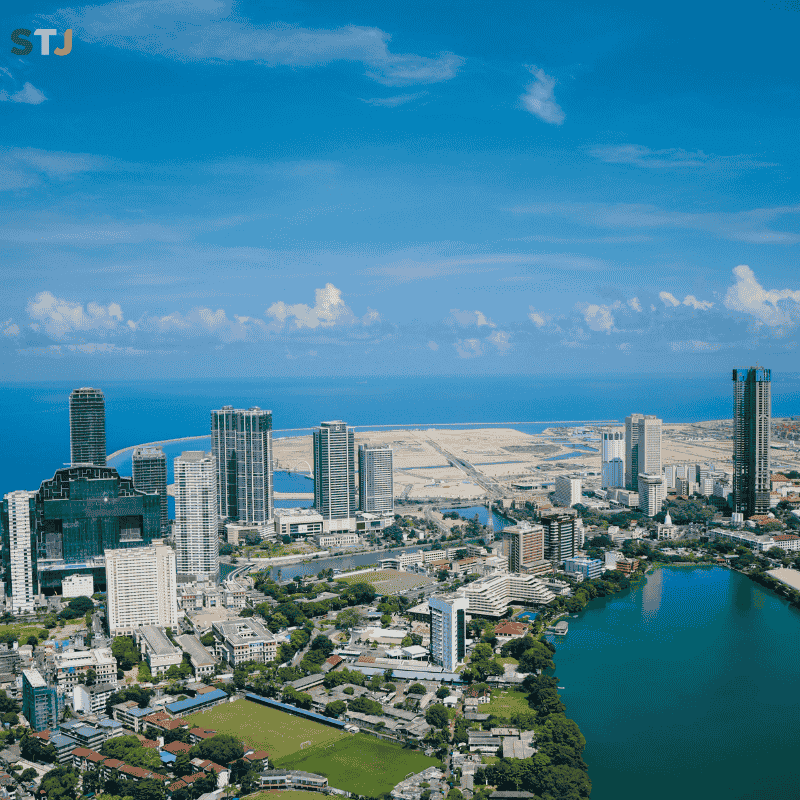
As for local attitudes towards tourists, he said Sri Lanka is known around the world for its hospitality, safety and strong sense of cultural protection. Its people are friendly, open and proud to share their traditions. Although the official languages are Sinhala and Tamil, a significant part of the population speaks English, thanks largely to technical schools that promote education and training.
Tourism follows a seasonal pattern. Between November and April, coinciding with the European winter, most travellers arrive from Germany, France, Russia and China. During the European summer the flow changes, with more visitors from Spain, Italy and the Netherlands. Local attitudes towards tourism remain one of the pillars of the sector.
Sri Lanka keeps its reputation as a safe, welcoming destination, deeply proud of its culture. Although the official languages are Sinhala and Tamil, part of the population communicates in English, thanks in large part to the expansion of technical schools that have broadened educational opportunities.
My time with him made it clear that Sri Lanka projects its tourism identity in a decentralised and deeply human way. His stories were more illuminating than any institutional dossier: from the way guides explain the history of tea to their interpretation of Buddhist spirituality, competition between operators and the need for ongoing training in languages and customer service.
This contrast between institutional silence and the openness of a local guide prompts a necessary reflection. What happens when a country’s tourism story depends more on individual effort than on official strategy? How does that affect the image it projects abroad? And above all, what does it say about a destination when its most accessible and insightful voices are not in government offices, but on the roads, in the temples and at the viewpoints where guides tell stories every day?
The interview helped me understand that Sri Lanka lives from tourism not only economically but emotionally. For many local workers, welcoming visitors is a source of national pride, a chance to show their resilience and a way of projecting an identity that has survived war, economic crisis and natural disasters. The tourism narrative, then, is far more alive and spontaneous than an institutional approach might suggest.
Journalism does not always get the answers it is looking for, but it always finds a story. In this case, the story was not in an office, but in the eyes and voice of a local guide who, from his own experience, offered a profound and human view of tourism in Sri Lanka.
What was the hardest part of the process?
A major challenge was not having enough help or external references to check or complement the information. The lack of support meant the work depended entirely on my own efforts: reorganising, clarifying and giving journalistic shape to the whole testimony without any additional backing. The most complex part was turning a set of disconnected elements into a fluent, accurate text that was faithful to the guide’s voice, keeping its authenticity while raising it to a more solid narrative level.
How did I feel at each stage?
While writing this piece I went through several emotional stages. At first I felt disoriented, trying to organise information that arrived in fragments and without a clear structure. The lack of help or external references made that first phase feel even more challenging.
As I tried to shape the content, a mixture of frustration and determination set in. Frustration at how hard it was to turn loose data into a solid narrative; determination because, despite the complications, I knew I could find the thread if I persevered.
Over time, as everything began to take shape and each piece found its place, I felt a sense of relief and clarity. That was the moment the story stopped looking like an impossible puzzle and began to become a coherent, meaningful account.
I felt very lucky to be travelling around Sri Lanka, to have lived the experience first-hand and to be able to soak up real, direct and human information. That allowed me to connect better with the essence of the story and convey it authentically.
By the end, the main feeling was a combination of satisfaction and confidence: satisfaction at having turned all that material into a solid piece of journalism, and confidence because the process, though difficult, reaffirmed my ability to turn complex experiences into a complete, professional narrative.
What have I learnt as a journalist in training?
As a journalist in training, I take away several important lessons from this process. First, I understood the importance of patience and perseverance: organising scattered information and turning it into a coherent story takes time, care and attention to detail.
I also learnt that direct observation and fieldwork are essential tools. Being on the spot allowed me to pick up nuances that cannot be found in documents or in separate interviews, and which greatly enrich a piece of journalism.
I also learnt the importance of choosing what matters most and presenting it clearly without losing the source’s voice. And, above all, that journalism carries responsibility. We must tell the truth and respect both those who inform us and those who read us.
Altogether, this process taught me that journalism is not just about recounting facts, but about building a bridge between reality and the reader, by listening, observing and making sense of every detail.
Interested in writing about travel that explores the extraordinary? Discover the Master in Travel Journalism and the Master in Gastronomic Journalism and Communication at the School of Travel Journalism.