
By Ana Oubiña
In the heart of Cambados, where the sea meets the fertile land of Galicia, a way of working with meat survives that escapes the rush and tight margins of the industry. A Xeitosiña is not just a butcher’s shop: it’s a statement of principles. Founded in 2020, this small business has backed from day one what others have left behind: local produce, respectful rearing and the flavour that comes from care.
The man who runs A Xeitosiña is clear about it: the key is working with smallholders from the province of Lugo, people he trusts, farmers with only a few cows who treat their animals like part of the family. «Os que teñen poucas, mímanas máis» (those who have only a few pamper them more), he says with conviction. His meat, mainly young veal between seven and ten months old, comes from free-range calves fed on their mothers’ milk and fariña milla (maize flour), an age-old recipe that makes all the difference today.
Against the tide of the big commercial labels, he has chosen not to join the PGI Ternera Gallega. He doesn’t mince his words: «A IGP matou ao paisano pequeno» (the PGI killed off the small farmer). As he explains, the paperwork and costs of belonging to the label have favoured the larger farms, leaving out the small farmers who rear their animals the traditional way. For him, what counts isn’t the label but the flavour. The fat of a calf raised calmly, with respect and good feed, he says, brings a juiciness you notice from the very first bite.
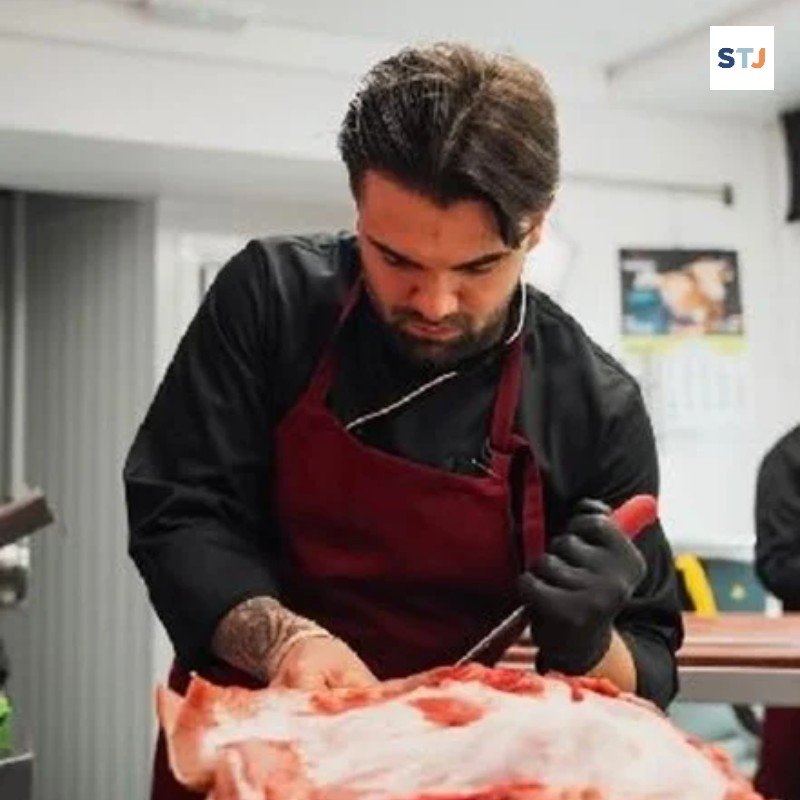
As well as beef, pork, chicken and lamb, A Xeitosiña sells prepared products such as zorza (marinated pork), chicken wings, flamenquines and pinchos morunos, with that home-made taste you don’t learn in a factory. Its regulars are families and tourists, people who appreciate top-quality produce. «In hospitality, many go for price and quantity, not quality,» he laments. But those who walk into the shop know what they’re looking for.
The future, however, is far from certain. Many of the farmers he works with are already in their seventies or eighties. When they retire, who will be left? He may have to take on rearing the animals himself, a tough commitment but one he’s willing to consider. «O mimo e a lactancia son o máis importante no sabor destes animais» (care and suckling are what matter most for the flavour of these animals), he insists.
Visiting A Xeitosiña means returning to a Galicia that still defends its essence. A place with no shortcuts, only respect for things done well. And if good taste had a slogan, here they’d have it clear: «O sabor da tradición», the taste of tradition.
Ana Oubiña wrote this piece as part of their training at the School of Travel Journalism. If it inspired you, take a look at our Master in Gastronomic Journalism and Communication and our Master in Travel Journalism, watch our students’ travel documentaries on YouTube and listen to their stories on our podcast on Spotify.
Interested in writing about food and travel beyond the obvious? Discover the Master in Gastronomic Journalism and Communication and the Master in Travel Journalism at the School of Travel Journalism.