
By Ismael Acosta
An island with two faces, where the green forests of the north blend in perfect harmony with the lava flows of the south. El Hierro can boast of having bypassed the mass tourism that other parts of the world are trying to curb. Limited air and sea connections and a small number of hotel beds have made the island a unique, isolated place where travellers can savour something human beings need: silence.
The noise of cars gives way to kilometres of trails through untouched nature, crossing forests unique in the world such as La Llanía, a must for lovers of nature and botany. This laurel forest stays wrapped in mist for much of the year.
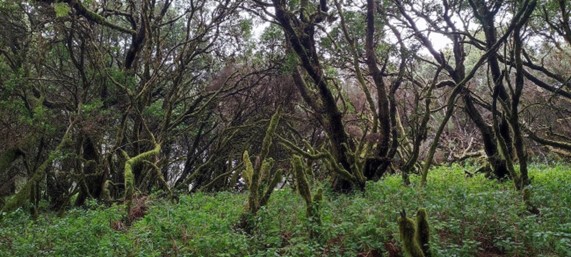
Walking its paths feels like stepping into a fairy tale. Green is the dominant colour here, with moss, ferns and lichens clinging to the stones, always sheltered by centuries-old lime trees and tree heath.
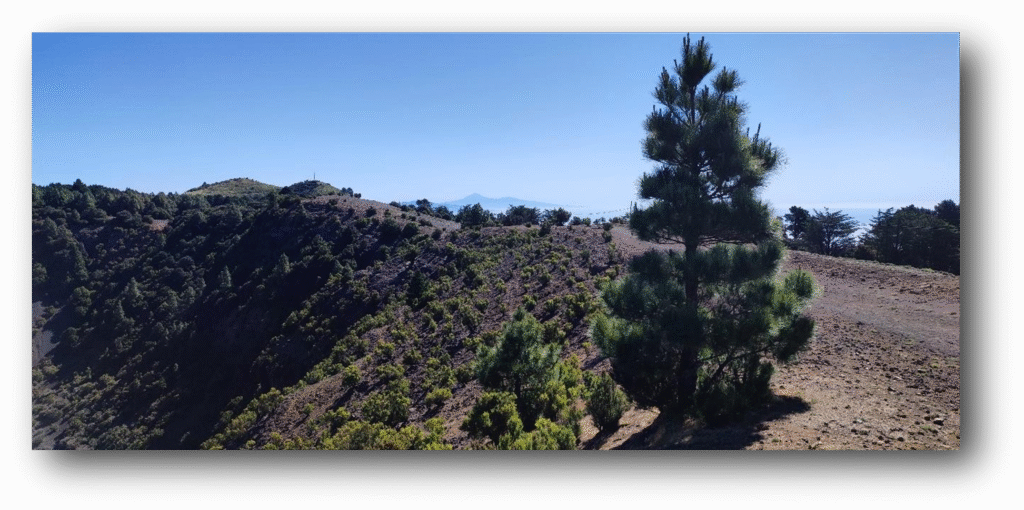
But this area isn’t only green. The sudden appearance of a volcanic crater changes the scene in a matter of seconds. Once again silence takes centre stage, broken only now and then by birds flying overhead. The contrast exists because the height of the forest stops the trade winds from going any further, leaving this area bare of vegetation.
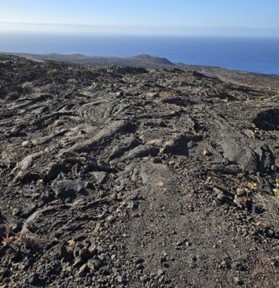
Barely 30 km by car separate La Llanía from La Restinga, famous worldwide among divers. Here the land turns black, living proof of recent eruptions. In 2011 the underwater volcano Tagoro wiped out all marine life here, which then came back stronger than ever. Today many people come to enjoy the area’s biodiversity, blending in with groupers, rays and angel sharks.
The lava flows of La Restinga remind us where we come from, and that beneath our feet lies an indestructible force full of life, which first destroys and then gives us an explosion of life. Walking on them makes Canary Islanders feel part of their identity, their culture, because we cannot forget that lava is in our DNA.
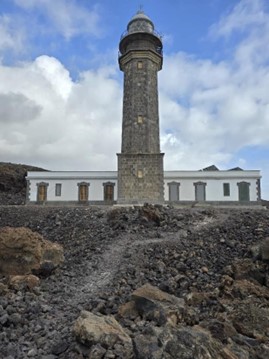
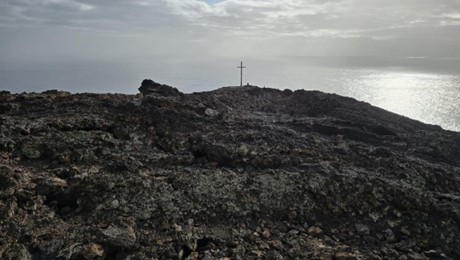
For centuries, the Orchilla lighthouse stood at the end of the known world. Before Greenwich took its place, the Zero Meridian ran through here. Watching the sunset from this spot is a unique experience. Set in a landscape of solidified lava, the lighthouse was the last thing islanders saw when they emigrated to the Americas and the first thing they saw when they returned. It is known as the place of sorrow and joy for El Hierro’s emigrants.
The Cruz de los Navegantes (Sailors’ Cross), just a few metres from the lighthouse, blessed and protected every islander who crossed the Atlantic, and symbolises El Hierro’s role as the last Christian land in the age of discovery in the 16th century.
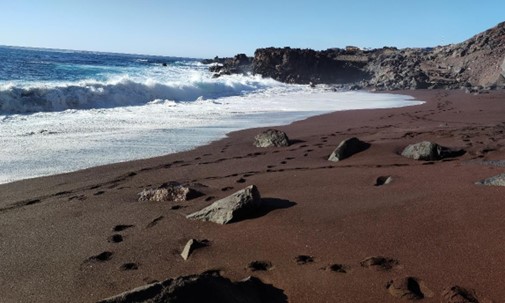
To end the journey, we reach the wildest spot on the island: Verodal beach, one of the most isolated and least known places on El Hierro. Its isolation and «tricky» access mean few people visit. It isn’t a beach where you can swim without taking precautions, as its location makes for strong currents, but you can walk on the red sand or simply sit and watch the waves crash against the cliffs.
Getting to El Sabinar is an experience in itself. Close to the sanctuary of the Virgen de los Reyes, the island’s patron saint, the access road twists and turns through pastures where goats and sheep rule. There’s no phone signal at all, so here the sound of nature is the only noise.
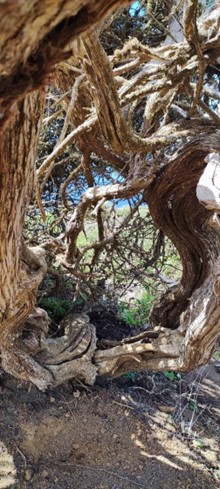
The juniper woods appear in the distance. This tree, unique of its kind, doesn’t grow upright: the prevailing trade winds have shaped it at will, which is why the juniper grows twisted. The juniper adapts, something the people of El Hierro see reflected in themselves.
El Hierro doesn’t make noise; it passes quietly by. Only those who know how to look come close enough to see it. It smells of nothing, yet it has a special scent. The island speaks to you; you just have to learn to listen. That’s why speech is a sense you lose along the way: only by sharpening your sight and hearing will you understand the meaning of every word.
Ismael Acosta wrote this piece as part of their training at the School of Travel Journalism. If it inspired you, take a look at our Master in Travel Journalism and our Master in Gastronomic Journalism and Communication, watch our students’ travel documentaries on YouTube and listen to their stories on our podcast on Spotify.
Interested in writing about travel that explores the extraordinary? Discover the Master in Travel Journalism and the Master in Gastronomic Journalism and Communication at the School of Travel Journalism.