
By Ioana Gabriela Dungler
Uzbekistan is now on my travel shortlist. As a place I want to discover.
Until last week, I knew relatively little about Uzbekistan. While a presentation unfolded, minute by minute, I became increasingly fascinated by Uzbekistan’s beauty, colours, extraordinary history, nature and remarkable mixture of cultures.
Alongside that fascination came an unexpected feeling of urgency. I simply cannot miss the opportunity to experience this country while it still retains so much of its authenticity.
More than a trade route
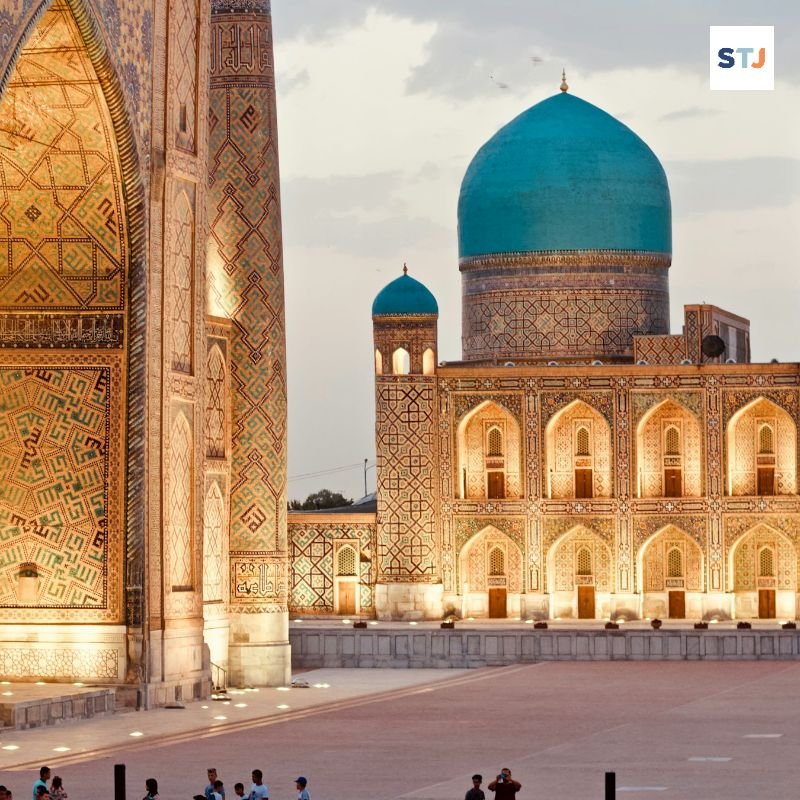
The Silk Road was much more than a network of trade routes. It was a meeting place for people, ideas, religions and cultures, and Uzbekistan still carries the traces of those encounters. Through Sanjar Azizov’s presentation, Samarkand, Bukhara and Khiva emerged as places where centuries of history are reflected in magnificent architecture, intricate mosaics, vibrant colours and traditions that have survived generations.
What fascinated me most was this extraordinary cultural mixture. Persian, Turkic, Islamic and Russian influences have all contributed to shaping the country we see today.
A tale from my childhood
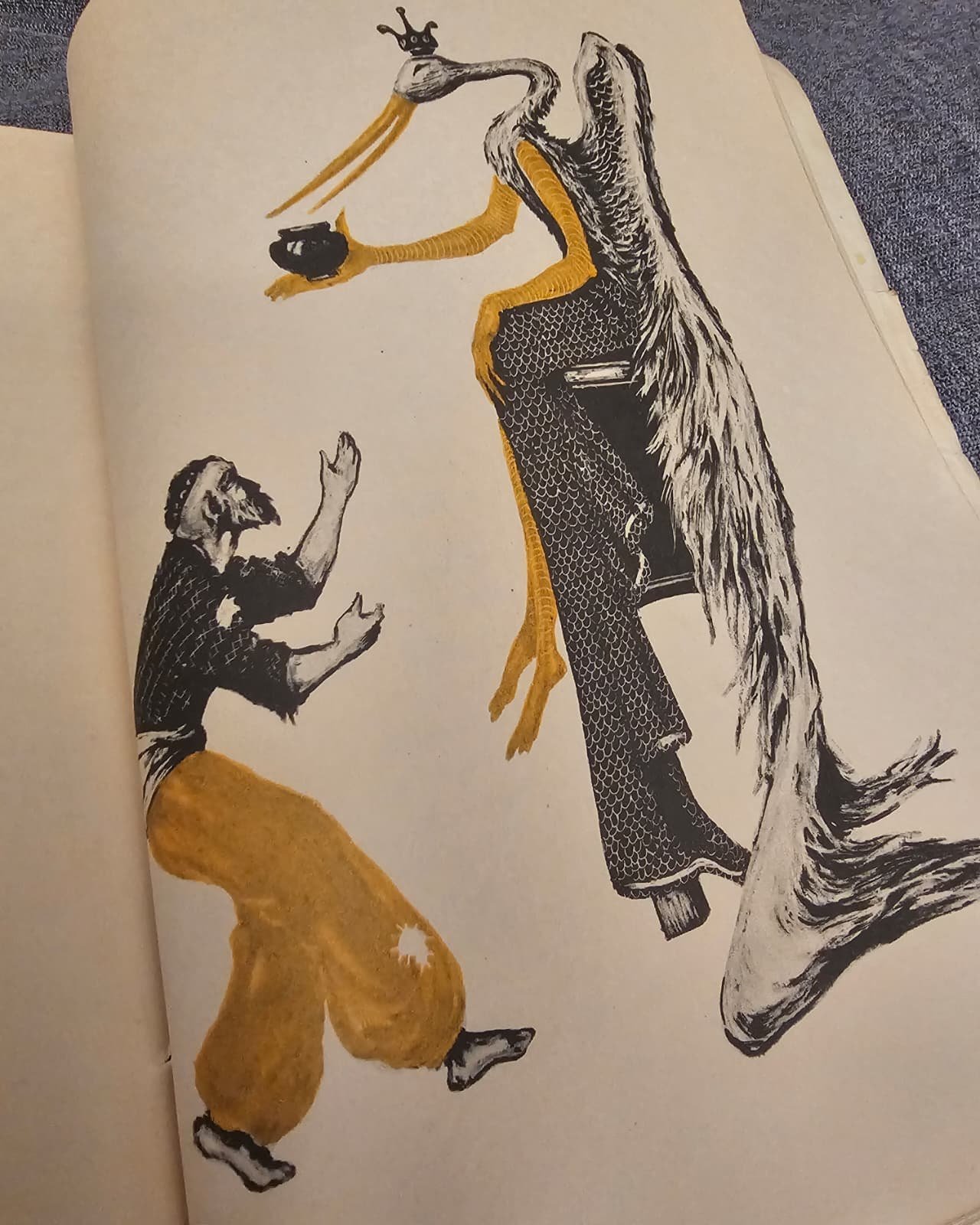
Then came the “wait a minute” thought! I was turning nine when my parents gave me a book called Din poveștile Asiei (From the Tales of Asia). It was printed on beautiful, thick paper, with extraordinary illustrations that stayed with me for years, as only images discovered in childhood can.
I was right: in my precious book there is a fairy tale from Uzbekistan, “Lovește, retevei!” (“Hit, Stick!”).
Cities, deserts and a vanishing sea
Beyond the magnificent cities and their history, Uzbekistan offers another world to discover: mountains, fertile valleys, vast deserts and the Aral Sea. The ecological tragedy of the Aral Sea reminds us how profoundly human decisions can affect wildlife, entire ecosystems and the communities that depend on them.
There are different ways to explore Uzbekistan. You can visit its famous monuments and historical treasures, but you can also take your time, wander through the streets, discover local food and crafts, and experience everyday life. Personally, I have always preferred discovering a country through its people rather than ticking monuments off a list. And what a pleasure to learn that Uzbeks are happy to strike up a conversation with visitors! For me, those spontaneous encounters are often the most memorable part of a journey.
Uzbekistan can be explored by train, domestic flights and buses. Renting a car is also possible, but a little research revealed a few things worth checking before setting off: whether an international driving permit is required, the condition of roads outside the main cities, and possible restrictions in certain border regions. Personally, I think I would choose the train, and I would use my phone only for taking pictures, even if free Wi-Fi is on offer.
One important detail for British, South African and New Zealand travellers: in Uzbekistan, they drive on the right side of the road. The right side, of course.
One dish, two mothers
Then came the food. When I heard that plov, or pilaf as we call it in Romania, is one of Uzbekistan’s traditional dishes, I immediately thought of my mother’s kitchen in Bucharest. Her pilaf is made with rice, spices, vegetables and chicken. Thousands of kilometres away, an Uzbek mother prepares her own pilaf, with rice, vegetables, spices and meat. One dish, two very different places, and surely the same joy of bringing a family together around the table. I smiled, imagining my mum meeting that Uzbek mother.
Then the urgency…
Yet, somewhere between the magnificent architecture, colourful markets and promises of warm hospitality, a question began to rise. Uzbekistan is opening up to international tourism, attracting investment, new hotels and familiar global brands. This development can bring opportunities for local communities, jobs and better infrastructure. But I wonder how much of the country’s character might change along the way.
I like comfortable hotels and modern facilities. Nevertheless, I love the authenticity of a place where I feel safe and welcome. What worries me is the possibility of travelling thousands of kilometres, hoping to discover a different culture, only to end up surrounded by the same hotel chains, restaurants and experiences I can find on my doorstep. For me, the beauty of travelling lies in discovering what makes a place different, not what makes it similar.
I hope Uzbekistan will manage to welcome more visitors without losing what makes it special. My own experience has taught me that opening up to international investment and tourism brings both opportunities and threats. Finding the right balance between economic development, local interests and cultural identity is not always easy. I sincerely hope Uzbekistan succeeds.
I want to see the colours of Samarkand, walk through the streets of Bukhara, taste the local food and, above all, meet the people. I want to discover how much of the Uzbek Asia I imagined as a nine-year-old girl, turning the pages of a beautifully illustrated book, I might still find in their stories. And I will certainly ask them about those fairy tales!
So, Uzbekistan has moved from a country I knew little about to one I want to visit.
An important piece of good news from the masterclass: Uzbekistan was presented as a safe destination for solo travellers. Well, I’m a solo traveller. Uzbekistan, here I come!
Vienna, November 2026
Ioana Gabriela Dungler wrote this piece as part of her training in the Master in Travel Journalism at the School of Travel Journalism, after the masterclass on Uzbekistan given by Sanjar Azizov.
Want to turn your travels into stories that get published? Discover the Master in Travel Journalism and the Master in Gastronomic Journalism and Communication at the School of Travel Journalism.