
By Mónica Romero
“Costa da Morte” series · Part 5 of 10. A series by Mónica Romero, written as part of her final project for the Master in Travel Journalism at the School of Travel Journalism (2026).
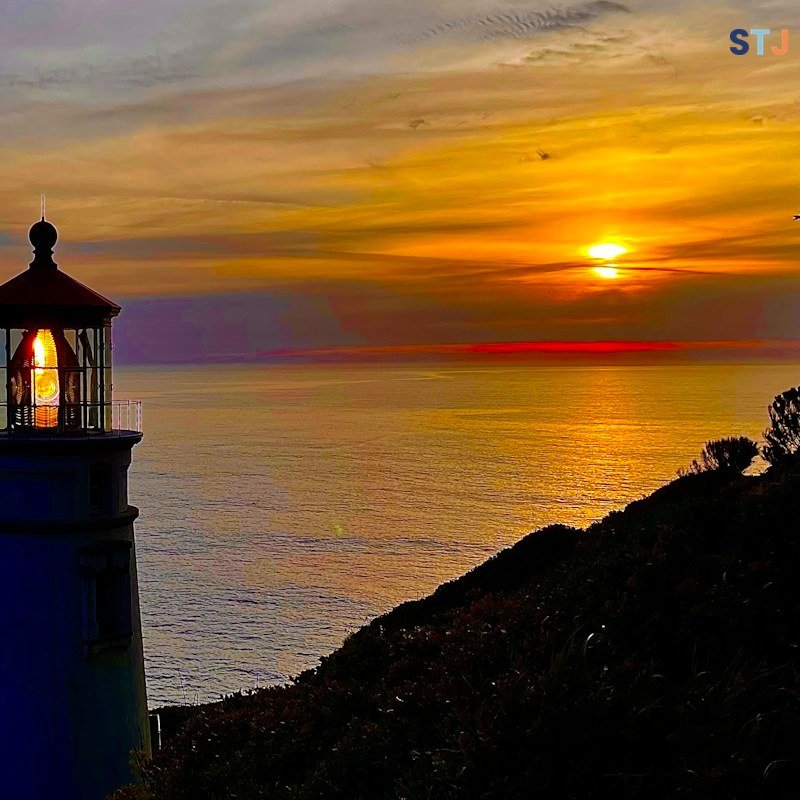
Fisterra is the longed-for ending for the many people whose goal is to reach the famous “End of the Earth”. Some arrive after walking for weeks, a ritual of moving forward little by little with their thoughts until they finally reach the lighthouse and its famous end-of-the-world sunset.
Others park their car a few metres away. But either way, when you get there you realise it is an ending: you cannot go any further, and it feels as if everything stops here.
Cape Fisterra has that strange ability to turn a few hundred metres of road into something symbolic. Perhaps because, for centuries, this tip of Galicia was imagined as the last land before an unknown ocean.
Its very name comes from the Latin finis terrae: the end of the earth.
Today we know that Fisterra is not even the westernmost point of the Iberian Peninsula. Cabo Touriñán lies further west.
But emotional geography does not always obey coordinates.
Fisterra is still the end of the world.
The lighthouse came into service in 1853. It stands about 138 metres above sea level and its signal reaches dozens of kilometres out to sea. In 1888 a foghorn was added to help sailors in thick fog. Its sound ended up earning a nickname far less solemn than the place itself: “the Fisterra cow”.
In recent decades, however, the lighthouse has also become the symbolic end of another journey.
The Camino.
The official Camino de Fisterra y Muxía route leaves Santiago and continues to both places, extending the pilgrimage all the way to the Atlantic. You only need to visit the lighthouse in the afternoon to see it.
Backpacks propped against the stones. Worn-out boots. People hugging. People sitting in silence, gazing at the horizon.
Some have walked 100 kilometres. Others, 800.
And suddenly everything ends in front of an enormous expanse of water.
For years there was also a custom of burning boots or clothes as a symbol of renewal. It is one of those stories repeated so often that it has taken on the appearance of a medieval tradition, although how old it really is remains much debated.
What is beyond debate is that lighting fires here today is an environmental and safety hazard, and it must not be done. You do not need to burn anything to close a journey.
In fact, sitting down is enough.
The most special moment comes as the sun begins to set.
For a few minutes, conversations fade. The Atlantic turns orange, then red and finally bluish grey.
Then something curious happens.
Fisterra stops feeling like an ending.
Many pilgrims say that reaching this point does not so much give them the feeling of having finished as the need to decide what to do next.
Perhaps that is why this cape has survived all its contradictions so well.
It was the end of the world when the world still had edges.
It is the end of the Camino for those who need a few more kilometres after Santiago.
And it is, at the same time, a place everyone has to come back from.
When the sun disappears, visitors start to get up.
Some walk back to the village.
Others look for a bus.
Some carry on towards Muxía.
And the lighthouse beam begins to turn.
That is when Fisterra changes its role.
By day it welcomes those who arrive.
By night it goes back to doing what it was built for more than a century and a half ago: showing the way to those who are still travelling.
This article is part of Mónica Romero’s final project for the Master in Travel Journalism at the School of Travel Journalism.
Mónica Romero wrote this piece as the final project of her training at the School of Travel Journalism. If it inspired you, take a look at our Master in Travel Journalism and our Master in Gastronomic Journalism and Communication, watch our students’ travel documentaries on YouTube and listen to their stories on our podcast on Spotify.
← Previous instalment: Cabo Vilán: The Light Born of Fear and Storms
Next instalment: Touriñán at Sunset: The Ritual of the Last Light →
All parts of the “Costa da Morte” series
- 1. The “End of the World” Lighthouses of Costa da Morte: Where the Map Ends and the Atlantic Begins
- 2. A 3–5 Day Lighthouse Route Along Costa da Morte: Scenic Itinerary, Stops and Experiences
- 3. The Shipwrecks That Named Costa da Morte: 8 True Stories and What Remains of Them Today
- 4. Cabo Vilán: The Light Born of Fear and Storms
- 5. Fisterra: The Lighthouse at the End… and the Beginning of Many Lives (you are here)
- 6. Touriñán at Sunset: The Ritual of the Last Light
- 7. The Lighthouse Keeper’s Life: From Isolation to Automation
- 8. Coastal Legends: Raqueiros, Stones with Memory and Other Tales Still Told
- 9. 12 Costa da Morte Viewpoints for Breathtaking Sunsets
- 10. Photographing Lighthouses and Storms on Costa da Morte: Gear, Safety, Framing and Golden Hours