
By Evi Giourouki
As a teenager, I was always dreaming of the places I would visit. I would open travel guidebooks and imagine how great it would be to experience all that information in real life: wandering through museums, trying local food, having bohemian conversations with artists in Prague. I was a teenager and I was not allowed to travel alone, so travel guides were the only ticket I needed. I could open one whenever I wanted and be transported anywhere in the world. Xavier de Maistre wrote a whole book about travelling around his room; I was dreaming, inside my own room, that I could travel the world. The dream was always the same: to travel.
An Erasmus scholarship to King’s College London
I had always dreamed of going on an exchange to a university in another country. I knew I wanted to be an English teacher and to study English language and literature, because it would let me communicate with people from all over the world. So I applied for an Erasmus scholarship to move to London. I still remember the day the results came out — I couldn’t believe it. To be honest, I had been a little sneaky: I got in during the second round of applications, after a friend told me there was an open spot that almost no one knew about. I applied quietly, and I got in. What followed was an immense amount of paperwork, but I knew it was all worth it. The forms were still not finished shortly before my departure, at the end of December 2013.
I had booked my flight for the 27th of December with my own money. Between the paperwork and the endless details, the idea that I was actually moving to London never quite sank in. I didn’t have time to celebrate. All I really knew was that London is a true metropolis of the world, like New York — and that my Erasmus wouldn’t be the typical European one. Friends of mine had gone to charming little towns in France, where everything was cute, safe and close-knit, and it was easy to befriend the other exchange students. That was not going to be my experience. I had never been to London — or anywhere in Northern Europe — and I had no idea what to expect. Would it be like Harry Potter, or like Skins?
Leaving home: an airport and a teary father
I went back to my hometown to celebrate Christmas with my family, and then off I went to the airport. My dad took me to Athens — I am a small-town girl, after all. I still remember him being teary-eyed at the airport, trying, unsuccessfully, to hide it. My parents always encouraged me to travel, and so did my grandparents. I grew up in a family of explorers who would stop whatever they were doing to watch Lonely Planet on TV. That’s how I learned to be curious about the world: through a screen, and through a page.
I crossed that metallic labyrinth of an airport entrance to travel alone for the first time in my life. There was no Brexit yet, so I could enter with just my ID. On the plane I realized I was not ready to live only in English. I had brought a mini London guidebook, but I was so nervous I could barely read a line. I just stared out of the window, trying to picture the next steps. We landed late in the evening. My dad had arranged a taxi to pick me up; I didn’t know it was already paid, so I handed the driver €50 — he probably thought it was a tip, and I still think about it. I remember looking anxiously out of the window. I didn’t know that man, or where he was taking me. The only thing I could do was trust — and trusting has never been easy for me. I took a breath and told myself I didn’t need to worry. I could see on the map that we were on the right track.
Arrival: too many lights, a new accent, a bathroom I refused to share
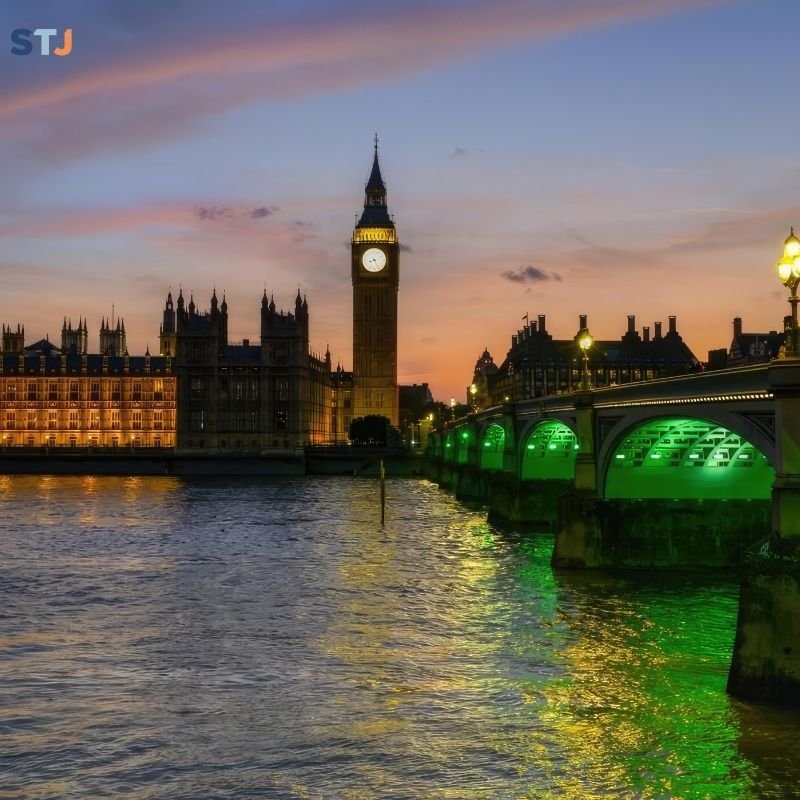
What I remember most is my absolute shock at seeing London. I had never seen such a city — the lights, the sounds, the buildings, the way everything smelled everywhere. It was too much at times, and I was equally scared and amazed. My temporary accommodation was near the Shard. The driver struggled to find it, circling the same spot again and again, which only fed my anxiety. Eventually we got there, and a kind Indian man helped me unpack. Inside, I realized that even though I considered myself a near-native English speaker, I could barely follow the local accent at first — I had grown up on the American one.
My room was nothing special: an old bed, the tiniest window in the world, a wooden desk, a shelf and a faucet. In the kitchen, everyone’s food was everywhere. I met two Chinese roommates cooking, and although one of them had no idea where Greece was and had to Google it, they offered me dumplings. The kitchen smelled gloriously spicy — I wasn’t used to spice back then, only Mediterranean food, but that was about to change. There was one problem: the bathroom was shared, and, sheltered and well-brought-up girl that I was, there was no way I would use it. For three days I washed at the faucet instead. I never once set foot in that shower.
Lost in the dark, rescued by two Greek girls
The next day I decided I had to buy cleaning supplies and reclaim that bathroom. But I have the worst sense of orientation — no skills at all — and, to make things worse, I had no signal. I still remember how dark it was. In Greece we get sun even in winter; London, at the end of December, had barely a two-hour window of daylight, roughly between 11:00 and 14:00. I couldn’t believe it. Following the front-desk lady’s “turn here, turn there,” it took me more than an hour to get back home from a supermarket that wasn’t even two blocks away. Inside, another surprise waited: self-service checkouts, which we didn’t have in Greece in 2014. And then my notorious luck kicked in — I heard two girls speaking Greek. Normally I’d never approach strangers, but I knew I had to do things differently here. They turned out to be from a town next to mine. They walked me to the supermarket, gave me directions and chatted with me, and I was so grateful. If they could live in this enormous city, I told myself, so could I. At least I would try.
A stranger’s promise
Another day, I got hopelessly lost looking for a bookstore near the campus, in very central London. The building looked like a hospital; it was chaotic, full of people from all over the world, languages and smells I couldn’t place. As I started to cry, a woman appeared, as if from nowhere, and stopped right in front of me. Strangely, I didn’t feel scared. She looked me straight in the eyes, as if waiting for a sign. “Excuse me, do you know where this bookstore is?” I asked. She took a deep breath and answered in a very serious tone:
“I will help you. But I need you to promise me something. Many years ago, I was in the same position as you, and an old lady asked me the very same thing: that I would one day help someone who asked for help, and take them to their destination safe and sound. Promise me you’ll do it too — at least once in your life.”
For a moment my small-town imagination ran wild — I could already picture the local headlines. But she simply said, “Here, I’ll take you there.” Three minutes later, we had arrived. “Thank you so much,” I said. “I’ll keep my promise!” I was speechless. Maybe I wasn’t as clueless as I thought. Maybe I would find the right people after all. There are moments in everyone’s life that are quietly critical. For me, that meeting was one of them.
Travel writing, and travelling around a room
After 40 minutes of struggle, I finally found the right bus to Embankment, where the campus was. I made my way to my course — travel writing, on the ground floor. The classroom looked nothing like the huge, chaotic, old buildings back home: it was clean, small and new. Only ten of us took the class, but I was thrilled. Travel writing was my dream, and I was there, in London. On the very first day, the professor spoke about reading travel literature. “I have undertaken and performed a forty-two days’ journey around my room,” wrote Xavier de Maistre in A Journey Around My Room. I got lost in that first class — not literally this time — absorbed by every word from de Maistre and Saint-Exupéry. That protagonist had managed to travel around his room, and here I was in a great metropolis. Maybe travel is a process. Maybe travel is a mindset. Who knows?
From a British nightmare to a citizen of the world
That first stretch was hard. New Year’s Day was two days away and I had no one to celebrate with. I kept a journal, and I remember writing that while some people move abroad and chase the American dream, I was living, at that moment, a British nightmare. Looking back, I complained for no reason — everything was simply new, and I was out of my comfort zone. On New Year’s Eve I was on a threshold: go out alone, or stay home? I decided to stay in and treat it as a normal day. Then there was a knock on my door: my two Chinese roommates, inviting me out. And I went. We were strangers to one another, but I had such a good time. I was in London on New Year’s Eve — I couldn’t miss that.
Pretty soon I made friends from Brazil, Italy, Germany, Spain, India, Korea, Singapore and the Netherlands. So many cultures, so little time. On the bus I would slip off my headphones just to hear the languages around me and guess where everyone was heading — we were all taking the same bus, but going to such different lives. And the food: Indian, Jamaican, Japanese sushi, everything new. There’s nothing better than a supermarket in a foreign country. I absorbed every detail about my friends’ languages, histories and countries; we even taught each other how to swear and use slang in our own tongues. Everything was new — new words, new food, new ideas, new people, new art — and I loved it. I knew I was not the same person who had left, and I would not return as her either. During the Easter break, almost ten of us booked a hotel in Amsterdam and travelled together. London had taught me to travel, and to explore while travelling, “in a proper way,” as they would say.
The journey within
That travel-writing course helped me understand the psychology of a traveller and to look at travelling through the eyes of poets and writers. Ten sessions, one book a week — and the first was, of course, de Maistre’s A Journey Around My Room. I began to wonder whether travel really is a mindset, and whether a place can change you so deeply that it shows in your outer life too. If you think about it, every big metropolis looks much the same: people from every corner of the planet, the same chains, the same clothes, the same perfumes. So maybe we travel to read something deeper than that — to reach deeper levels of ourselves. No matter where we go, we return home to ourselves, because perhaps we belong to the world. We see a part of ourselves in every place, and in every person we meet. That is why wanderers keep seeking new adventures: to find and to meet themselves in every part of the world. Cheers, London!
Evi Giourouki wrote this piece as part of her training at the School of Travel Journalism. If it inspired you, explore the Master’s Degree in Travel Journalism and the Master in Gastronomic Journalism and Communication, watch our students’ travel documentaries on YouTube, and listen to their stories on our Spotify podcast.
Read more on Travel & Create: Walls that Speak: A Journey Through Rome’s Street Art · I Threw a Dart at a Map… and Ended up in Kyrgyzstan.
This article is part of the practical work carried out by students on the Master’s Degree in Travel Journalism at the School of Travel Journalism.