
By Michaela Smolová
The old Italian saying “in the mouth of the wolf” might seem like something you would not wish on anyone, if you are a nice person. What is used today as a good-luck charm was, in the past, rather a hunters’ wish…
However, this idiom fits the theme of travel writing perfectly. Being a good travel writer is not only about writing itself. There is sometimes quite a long process that begins far sooner than the actual typing, or the use of a pen to note down what we carry in our heads.
Is it necessary to be born with a talent for writing to be a good writer? Or is this a quality that can be trained and learned with diligence and persistence? Maybe it is a bit of both, but what certainly helps is learning from those who are ahead of us: those who have more experience and are eager to share it.
A horseback journey from Italy to Spain
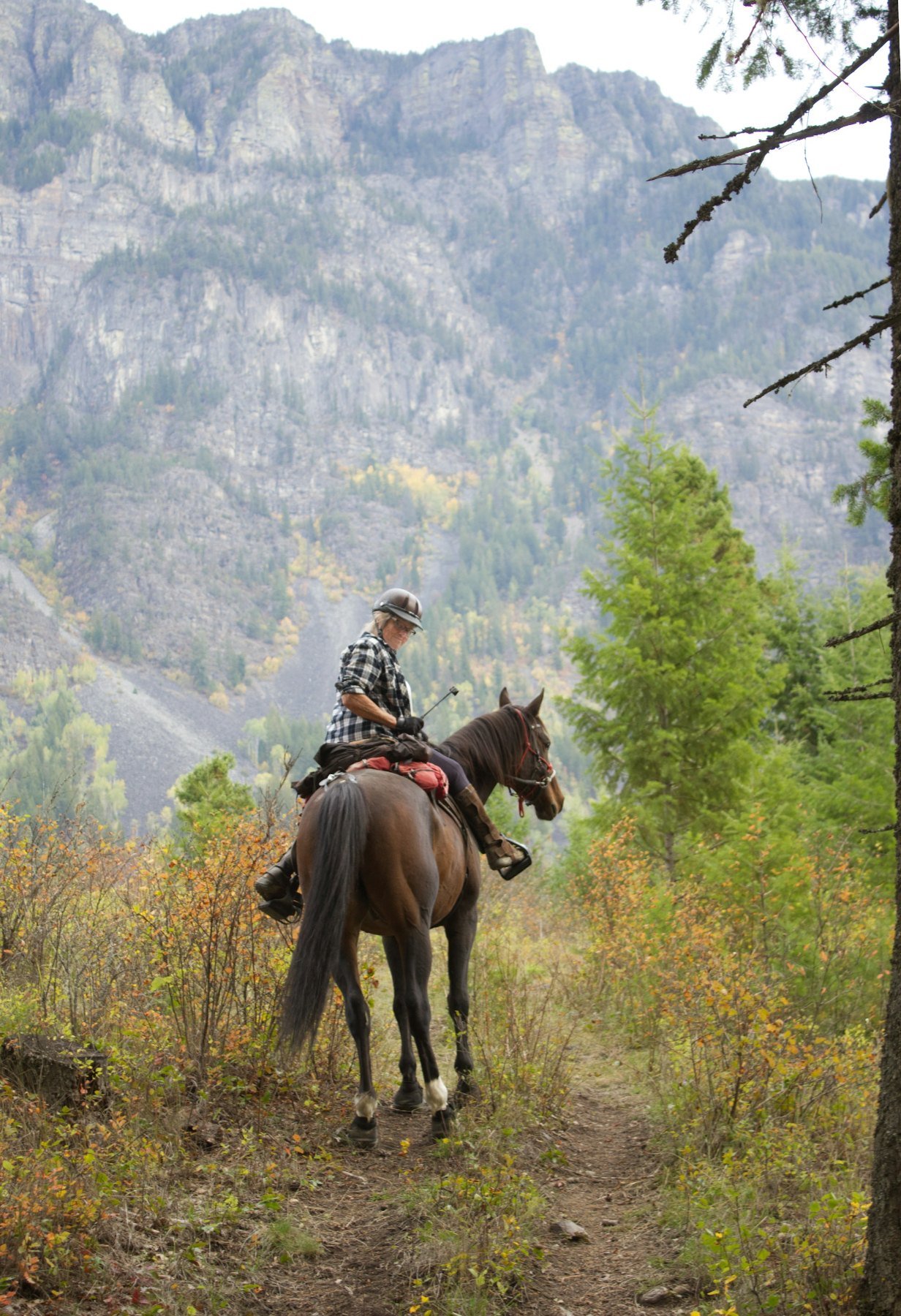
The young traveller and author Louis D. Hall, inspired by the legendary Don Quixote, decided one day to make a unique journey on horseback from Italy, through France, to Spain, with no other goal than to travel. Trying to stay off-grid and using the animal as a conversation starter, he travelled through these countries, meeting locals who opened up to him and shared their stories. Although this “horseback pilgrimage” sounds interesting enough in itself, Louis underlined that it was not about riding a horse for hundreds of miles. It was about his way of seeing the world around him, and also about the way the world saw him.
If many people visit the same place, each of them will see it through their own prism. They will perceive reality differently, influenced by their own experiences or even expectations. And this is where the uniqueness of a good travel writer may lie: in their way of seeing things and noticing details, in the way they embrace an experience and turn it into a travel narrative.
Wandering: travelling with intent
Sounds interesting, but how do you actually do this? Louis D. Hall shared his method. It starts with wandering, as he calls the process of travelling with intent: absorbing and observing. We are used to travelling very fast, capturing as many pictures as possible, moments that in the end are reduced to a flashback. We rely on the many pictures we take with our phones to remember a trip, but pictures, no matter how good, cannot retell the whole story with all its sensory aspects.
Maintaining curiosity enables us to go below the surface and discover new layers of experience, without using a map or GPS. “Looking lost is the best way to make friends,” says Louis, explaining that a huge part of travel narrative is meeting people by chance and listening to their stories.
Fast travellers act as if their goal were always to discover something new. It looks good on Instagram, doesn’t it? But what makes someone a slow traveller is looking for “places that lie waiting and forgotten”, in the words of the Scottish novelist and travel writer Robert Louis Stevenson.
Roaming: finding and cultivating ideas
The second pillar of the process is roaming: the stage when we try to find new ideas, pursue them and cultivate them. There are many sources of ideas, but the key, according to Hall, is discipline, in reading and in writing. Daily reading (Louis recommended several good books) and writing about anything we experience, see or are told are great practice for discovering new ideas. Being brave and observant can open new horizons for us, future writers, and getting out of our comfort zone takes us much further than we would expect.
A good way to start practising this is to keep a diary. Experts say a diary is a good way of capturing the events of our lives, and they sometimes compare it to a good talk with a therapist. But for writers, a diary means regularity and exercise: a safe space where they can note down thoughts they are not ready to share with anyone and train the art of turning observations into stories.
Making: from experience to article
The last stage of the process explained by Louis D. Hall, author of In Green, is making, which means transforming a set of experiences into an article. “Look at more things, not just one, and put them into relation,” was his advice. Daily training with a diary helps us react flexibly to the demands of publications and write a longer story faster.
As it turns out, the wolf idiom really was a good-luck charm, encouraging us not to be afraid in the world of travel writers. Encouraged by Hall’s story and advice, I opened my diary after a long time and started writing my first new chapter.
Michaela Smolová wrote this piece after the masterclass that travel writer Louis D. Hall gave at the School of Travel Journalism on 5 November 2026, as part of her training in the Master in Gastronomic Journalism and Communication. Louis D. Hall is the author of In Green: Two Horses, Two Strangers, a Journey to the End of the Land; you can follow him on Instagram at @louisdhall.
Want to turn your journeys into stories that get published? Discover the Master in Travel Journalism and the Master in Gastronomic Journalism and Communication at the School of Travel Journalism.