
By Monika Benduska
During my trip along Costa Rica’s Caribbean coast, I decided to visit a Bribri family in Talamanca. I didn’t want a group excursion or a visit staged for tourists. Nor was I interested in turning up, taking photos, trying something “typical” and leaving with the feeling that I had understood a culture in an hour and a half. So I chose a private visit: smaller, more intimate. And I had another reason too: I cared that the money stayed with the family itself.
Even so, I came away with a rather uncomfortable doubt. Until then, I had thought about sustainable tourism in the most obvious terms: pollution, buying local, protecting the environment. All of that matters, of course. But when you enter the territory of an Indigenous community, the question shifts a little. It’s no longer just about polluting; it’s also about intruding.
Entering a territory, not an attraction
Indigenous peoples make up 2.4% of Costa Rica’s population, and the Bribri live, among other places, in the Talamanca Bribri territory. That fact may seem secondary, but it changes the perspective considerably. I wasn’t entering a tourist attraction or an exotic stage set: I was entering a real community, with its own language, its daily life and its own relationship with the land. When a traveller enters a space like that, she also enters, even if only for a while, other people’s lives.
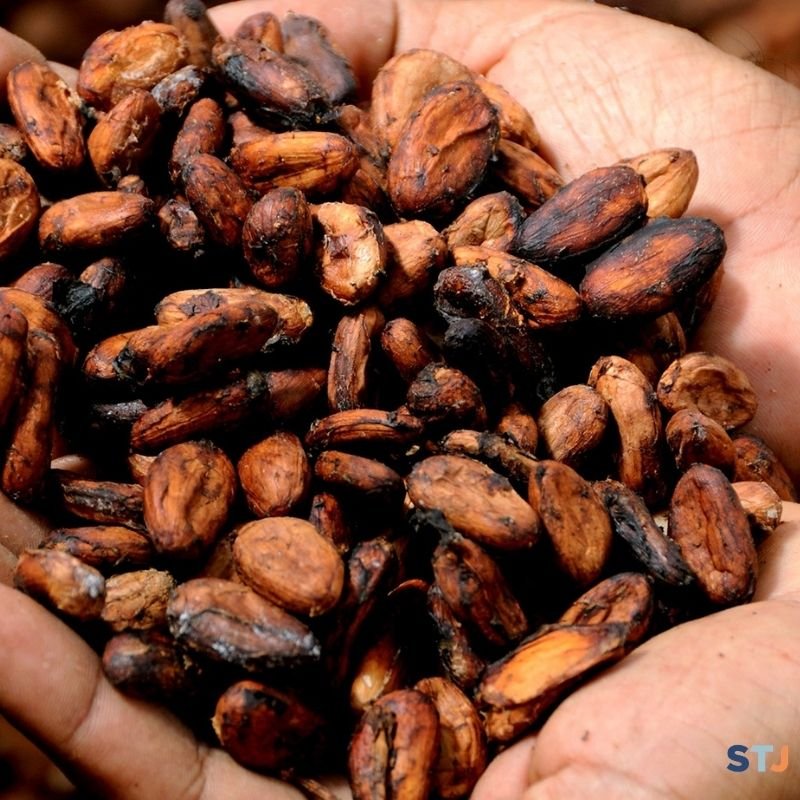
Smoke, cacao and a culture that isn’t frozen in time
The moment I got out of the car, the first thing I noticed was the smell: an intense smell of smoke, everywhere, almost physical. Then came the walk among medicinal plants, the explanation about cacao and a tasting that was nothing like the cocoa I’m used to in Europe. It had another texture, another flavour: more natural, less processed. I also remember the turmeric, and a plant shaped like a small gourd that they use to make bowls and plates, which they then paint and sell in their local shop. They are small details, but they helped me understand something quite simple: there, food, plants, crafts and land did not appear as separate things.
Another thing that struck me was that I didn’t find a community “frozen” in the past, as people sometimes imagine from outside. There were gravel roads in very good condition, links with the state school, with healthcare and with some state infrastructure. And at the same time they kept their language, their knowledge and a very strong relationship with nature. They also explained that there are still active shamans in the community and that some children are trained in that tradition from an early age. In Talamanca I saw a community living in the present without letting that present erase their way of understanding the forest, plants, cacao or the passing down of tradition.
Doña Viki and the dispute over timber
At the centre of the visit was Doña Viki. She was, without a doubt, the figure of authority in the family I visited: she had a very strong presence and everything went through her. She also helped me better understand the weight women carry in the social structure of the Bribri. I particularly remember a moment when she spoke, quite angrily, about having to pay for timber, even when that timber grows on Bribri land. You could tell it really bothered her. And it interested me precisely for that reason, because it broke with the easy image of an Indigenous community as a silent, harmonious space untouched by any present-day conflict.
Observing or intruding: the visitor’s discomfort
But what made me think most was not the cacao, nor the medicinal plants, nor even the conversation about timber. It was my own position as a visitor. Throughout the visit I felt a very specific unease: I didn’t know how far I was observing and at what point I began to intrude. I took photos, but I asked permission first. I asked whether I could take pictures during the tour and I also asked Doña Viki whether I could take some portraits of her. I only got my camera out when they said yes.
It may seem trivial, but to me it wasn’t. That’s when I realised something rather uncomfortable: tourism gets you used to thinking that if you pay, you can also look, photograph and tell. As if paying for a visit automatically included the right to take something away from the place: a story, an image or both.
The “no” that changed everything
For me, the most important moment of the visit came when I suggested to Doña Viki that I come back in the autumn to do a longer feature. She didn’t want that. She preferred to protect her community’s privacy. And, looking back, I think that refusal was more revealing than any speech about sustainability. At a time when almost everything ends up turned into content, that “no” struck me as a way of defending the community’s land and its privacy.
That’s why I don’t think sustainable tourism should be measured only by the traveller’s good intentions. It isn’t enough to avoid a mass tour or to want a “more authentic” experience. Sometimes that very desire for authenticity can be problematic too, because it still puts the traveller at the centre. I myself wanted to avoid an artificial experience and, even so, I still wonder whether, deep down, I wasn’t looking for a more intimate or more “genuine” experience than other tourists.
Here I find Agnes Callard’s reflection in The Case Against Travel useful. What interests me in that essay is the suspicion it casts on travel as a moral achievement. Sometimes we travel to learn, but sometimes we also travel to confirm a certain image of ourselves: that of the sensitive, curious traveller, different from the conventional tourist. In my case, that idea helped me look at my own visit with less self-satisfaction and a good deal more discomfort.
Sustainability as accepting a limit
My visit to the Bribri community didn’t leave me with a neat answer, or with a perfect example of sustainable tourism. It left me with something else: the idea that sustainability is also about accepting a limit. About understanding that not everything is available to the visitor. That a community can show you its medicinal plants, share its cacao or talk about its language and, at the same time, decide that there are parts of its life it doesn’t want to turn into a feature, an image or a tourist product. I didn’t leave with a grand conclusion, but with a very concrete discomfort: not everything is there for me. A community can show me part of its world and, at the same time, decide that another part stays inside.
Monika Benduska wrote this piece as part of their training at the School of Travel Journalism. If it inspired you, take a look at our Master in Travel Journalism and our Master in Gastronomic Journalism and Communication, watch our students’ travel documentaries on YouTube and listen to their stories on our podcast on Spotify.