
By Torunn Irene Seldal
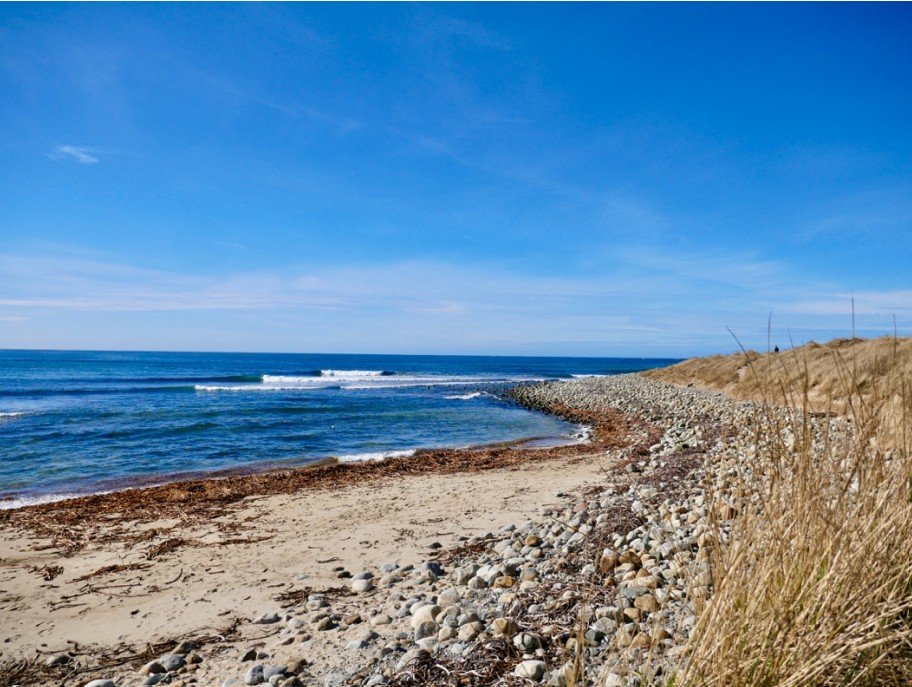
The beaches of Jæren offer space for thrill-seeking surfers, families and those seeking solitude. Stretching over 65 kilometres, the coastline includes more than ten beaches, each offering unique character for every personality. It is a mix of light sandy beaches, pebbles, rocks, dunes and grass-covered headlands — and it is also home to numerous surf breaks with high-quality waves.
In recent years, cold-water surfing has gained increasing attention, drawing adventure-seeking surfers to Norway’s exposed west coast. The beaches of Jæren have become the epicentre of Norwegian surf culture and are widely recognized as offering some of the country’s best surfing conditions.
Visit Jæren is a destination platform for both locals and visitors, covering eight municipalities. To understand how surfing fits into their broader marketing strategy to attract visitors to the beaches of Jæren, I interviewed Ann-Mari Gregersen, editor-in-chief of Visit Jæren.
Surfing is part of Jæren’s identity — but not the whole story
“We focus on year-round use of the beaches and one of them is surfing, but we don’t focus only on surfing. Variety is key,” Gregersen said.
According to her, surfing is an important part of Jæren’s identity. In the future, Visit Jæren might develop narratives focused solely on surfing. For now, other channels put their energy into surf-specific marketing, while Visit Jæren highlights surfing as one of several ways to experience the beaches. “There is a strong surfing community here,” she explains. Visit Jæren often refers visitors who ask about surfing to surf camps and local partners, which are their resource for photos and local knowledge.
“Preikestolen and surfing is what Jæren is mostly associated with, then food third,” she said. Certain images dominate public perception; at the same time, people link surfing to big waves, challenging weather conditions and physical demands. “How would that be attractive for families?” Gregersen asked.
A beach for families, hikers and solitude-seekers
Visit Jæren focuses on showing that the beaches are suitable for families and many different outdoor activities. Many are unaware of the full geographical scope of the coastline. “The first beach starts in Randaberg, and that is what many people don’t think about,” Gregersen said. Accessibility and the choice of so many different beaches play a central role in how the coast is promoted. “If you have a car, the availability and selection is enormous,” she enthusiastically said. Beaches are accessible by car and train, and there is one close to the airport with a hotel nearby. Hikers can walk for hours from beach to beach. “Many are not aware that parts of Orre Beach are for nudists,” she adds.
Year-round beaches: surfing, kiting and local well-being
One of the most distinctive aspects of the beaches of Jæren is year-round use. “Surfers use the beaches all year, and that activity is of course important for destination marketing. But it is just as much about local health: getting out in nature benefits both mental and physical well-being,” she said.
This is also how Visit Jæren wants to show visitors and locals that the beaches can be used all year for kiting, surfing, windsurfing and more. The beaches also offer beginner-friendly waves suited for families throughout the seasons. “We focus on protecting the environment just as much as using it for what it is worth,” Gregersen adds.
One of the most captivating aspects of the beaches of Jæren is that, no matter the season, you can always find your personal spot offering tranquillity and peace — nice if you need to clear your head. Even in summer, it is possible to find space for yourself on a crowded beach by just walking a little further. “The only problem is the full car parks in summer,” Gregersen said.
Promotion and responsibility: protecting what you promote
In the end, she reflects on the challenges of promotion and responsibility. “We also promote how to use the beaches responsibly and take care of the environment,” Gregersen explains. One of the main challenges is public transport, as only two beaches are reachable by train and a car is needed to explore the rest. “You want to attract people, but you also want to take care of the beaches.”
Local values are a central part of the communication. “The values we communicate are respect for nature,” Gregersen noted. This includes information about protecting vulnerable areas, where visitors are allowed to camp, and how to behave responsibly. “Norwegians have a strong cultural value of picking up litter,” she said.
For locals, the beaches are part of everyday life. “Locals think the best thing about the beaches of Jæren is that they can clear their mind and walk their dog.” This balance between promotion, protection and everyday use lies at the core of how Visit Jæren communicates the coast. “The locals who have lived here for 30–40 years know how fortunate they are,” Gregersen said quietly, with a long pause.
Torunn Irene Seldal wrote this piece as part of her training at the School of Travel Journalism. If it inspired you, explore the Master’s Degree in Travel Journalism and the Master in Gastronomic Journalism and Communication, watch our students’ travel documentaries on YouTube, and listen to their stories on our Spotify podcast.
Read more on Travel & Create: I Threw a Dart at a Map… and Ended up in Kyrgyzstan · Clouds and Volcanoes adventures.
This article is part of the practical work carried out by students on the Master’s Degree in Travel Journalism at the School of Travel Journalism.