
By Rafael Perez Segnini
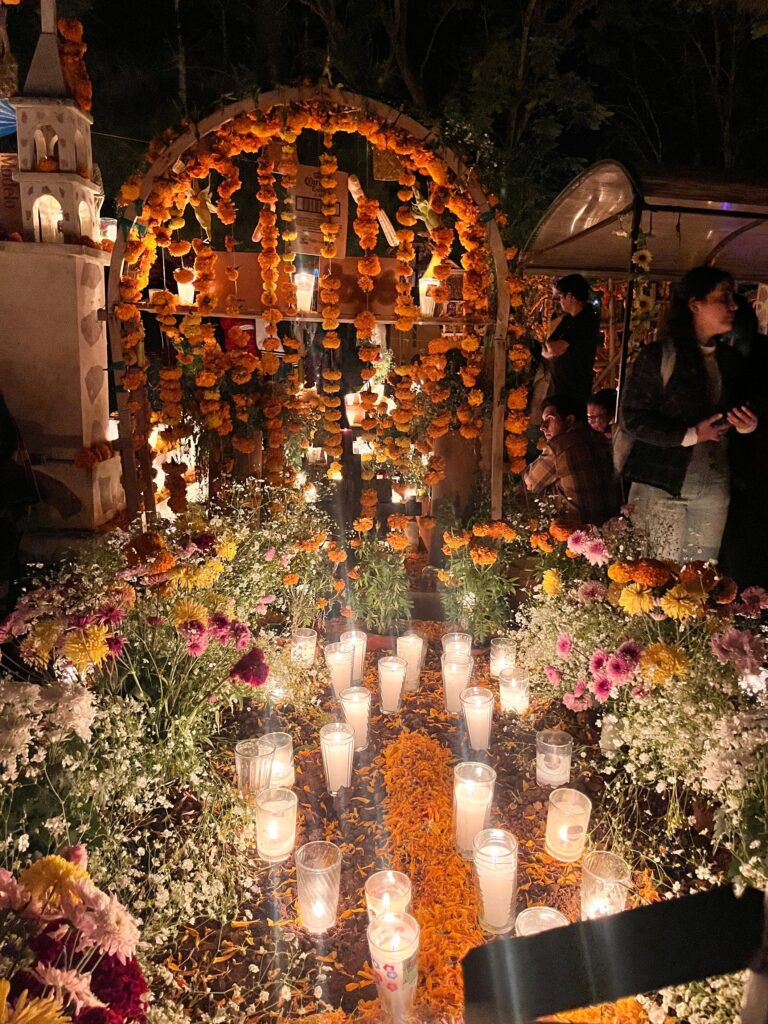
Arrival: air that smells of maize and memory
The air in Tzintzuntzan has a different density as the Day of the Dead draws near. It is not just the smoke of copal or the orange glow that floods the roads; it is something you breathe in more deeply, a blend of nostalgia, faith and freshly ground maize. I am back here after many years, and I feel I am returning to a part of myself that stayed behind, among the lit-up graves and the songs that seem to drift across the lake.
This time I have not come alone: I am with my Irish husband, curious and moved by a celebration that, as I have told him, is not about death but about reunion. In Michoacán I learnt that the Day of the Dead is not a folkloric show: it is an act of love. Every flower, every dish offered, every candle lit is a silent dialogue with those who are no longer here but still live on in memory and at the table.
Atole verde de grano: the liquid soul of maize
Among the aromas of the Tzintzuntzan market (pan de muerto, bean tamales, candied pumpkin) there is one that always stops me in my tracks: atole verde de grano, green corn atole. I first tasted it here, on a night of the souls, and its flavour stayed with me like a promise. It is neither sweet nor thick like the atoles of other regions.
It is savoury, almost vegetal, made with tender maize, epazote and green chillies. Its colour is that of the fields after rain, and its texture is a reminder that maize does not only feed us: it also tells stories. A Purépecha woman with weathered hands and a calm gaze once explained to me: “This atole is made with new maize, the kind that still has life in it. That is why it is offered to the dead, because the young grain holds the spirit of the earth”.
The preparation: fire at the heart of the ritual
At the market, the pots have been simmering since early morning. The steam rises as if trying to reach the souls that, according to belief, are already beginning to return. The women stir patiently; the clink of the ladle against the pot mingles with children’s laughter and the murmur of prayers.
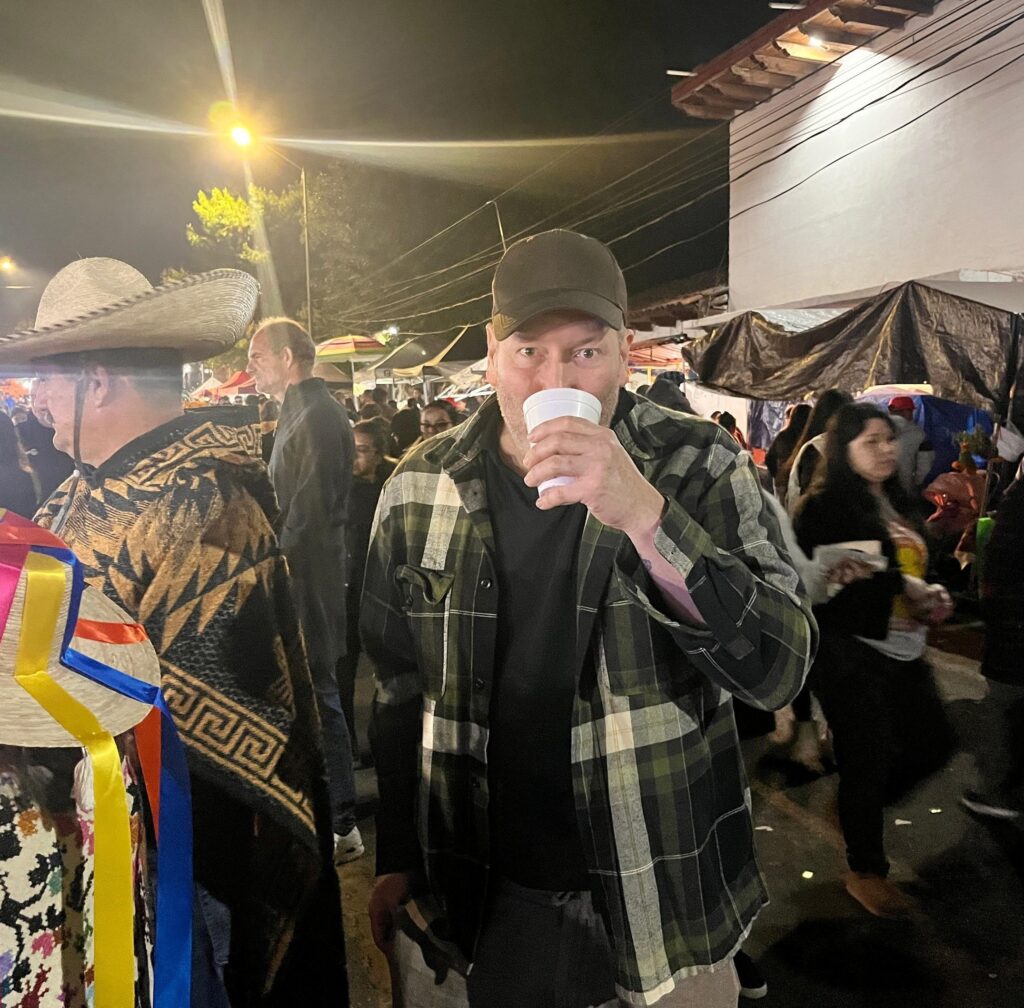
The maize, boiled with lime, is stripped from the cob and blended with chillies, epazote and sometimes a little masa. It is then strained, cooked slowly until it thickens and served hot in enamel mugs or gourd bowls. My husband takes his first sip and smiles. “It tastes like the earth itself,” he says quietly. He is right. The flavour is earthy and deep, with a hint of countryside and home.
Among graves and flowers: the night of the living and the dead
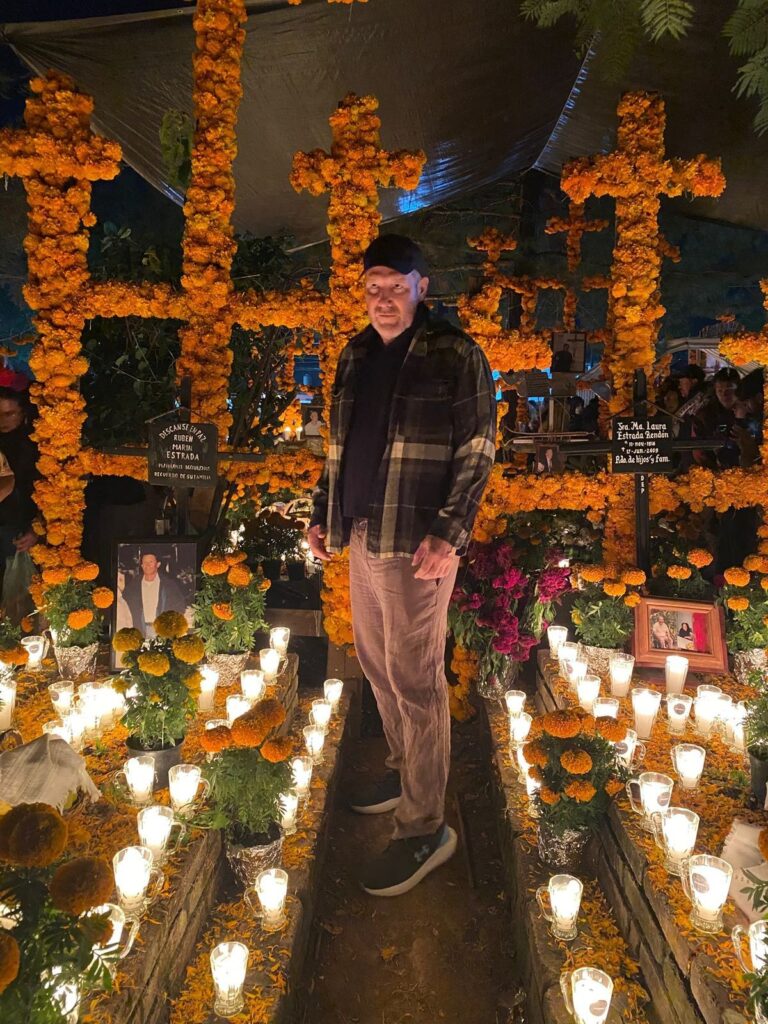
When night falls, the Tzintzuntzan cemetery becomes an ocean of light. Families gather around the graves, decorated with marigolds, bread, candles and photographs. There is no weeping, only conversation, soft music and that unmistakable scent of flowers and copal.
I walk among the altars and stop at a grave where a family is sharing atole and tamales. They offer me a cup, and I accept. As I drink, I feel I am taking part in an ancient gesture: sharing food with those who have gone but still belong to the community. In that moment I remember my childhood in the Venezuelan Andes, where marigolds also grew without my knowing their name. It was no coincidence: the flower that adorned the fields there guides the souls here. The memory of my two homelands meets in the same scent.
The ethics of remembrance
Atole de grano, I think, is not just a drink; it is a symbol of continuity. In its simplicity it holds a whole philosophy of the cycle of life: the earth gives the maize, fire transforms it, and the steam rises as an offering. The point is not to portray a picturesque tradition but to honour a worldview that celebrates life through death.
Purépecha culture does not fear the end; it embraces it. And atole, shared between the living and the dead, bears witness to that communion. As the candles begin to burn out and dawn paints the sky blue, the last wisp of steam from the atole fades among the crosses. In silence, I understand that every sip is a way of remembering, and every memory a way of staying alive.
Venezuelan chronicler and cultural observer. His work explores collective memory through food and traditional celebrations.
This article is part of the coursework completed by students of the Master in Travel Journalism and the Master in Gastronomic Journalism and Communication at the School of Travel Journalism.