
A reflection prompted by Marck Gutt’s class
By Èric Frigola
Among the subjects of the master’s, quite a few classes focus more on travel than on food in the strict sense. Even so, every discipline can offer useful insights if you know where to look from, and in my case that meant transferring certain concepts to my own field. That is why the reflection I put forward here springs from one of those tourism sessions which, on closer inspection, opened up an unexpected angle on culinary identity.
It was a session by Marck Gutt on cultural conservation and social responsibility in tourism. In it, a concept came up that I think is worth reflecting on: the commodification of culture. Commodifying a culture does not mean “selling” what is yours, but adapting what is yours so that it becomes easier to consume. It means selecting certain traits, toning down others, exaggerating some and, in short, moulding an identity to fit outside expectations.
When this happens, culture stops expressing itself from within – from those who live it – and starts expressing itself from outside – from those who observe it, buy it or judge it.
Although this happens with every aspect of culture, whether clothing, celebrations, architecture or anything else, it is especially evident in cooking. Sometimes dishes are no longer prepared for local diners, but for a visitor looking for something “typical” which, paradoxically, only exists because they are looking for it. When a place adapts its cooking to what visitors expect, food stops working as a language – something that says who we are – and becomes a stage set: a performance designed to match a tourist fantasy rather than to express a real identity.
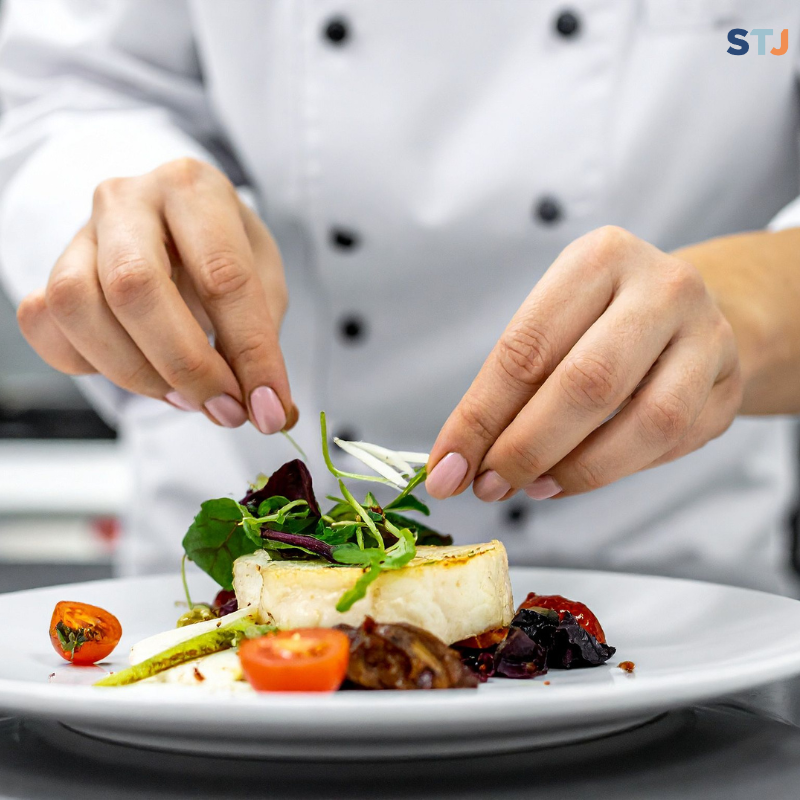
Understanding this logic made me rethink decisions I had experienced myself as a cook in tourist settings: adapted menus, toned-down flavours, recipes simplified to make them more recognisable, produce dropped because it “wouldn’t work for this crowd”. I saw it as a practical part of the job. Now I see it as a cultural process that, little by little, can alter the culinary identity of a place.
And this raises an uncomfortable question, especially for those of us who write about food: what responsibility do we bear for these distortions?
Because every time we call a dish “traditional”, every time we reproduce a comfortable image of what a place’s cooking is, every time we simplify a culture to fit the tourist imagination, we take part – sometimes unwittingly – in that commodification.
In my Final Master’s Project, this reflection has become central. Andorra is a clear example of the tension between identity and tourist expectations. On the one hand, there are efforts to strengthen the country’s culinary personality through quality labels that certify an offer rooted in the land, its producers and certain local values. On the other, it lives with the constant pressure of visitors who shape menus, prices, formats and even the story of what “eating in Andorra” means.
These institutional efforts, such as labels that seek to vouch for a cuisine with roots, arise precisely in response to that commodification: they are a way of saying “this is who we are” to a market that sometimes pushes us to say “this is who you expect us to be”. But the risk, even with these initiatives, is that identity also becomes a product to be marketed rather than something lived and practised every day.
So I come back to the question: what do we, as food journalists, do with that tension?
I believe the answer lies in taking nothing for granted, in listening to real kitchens more than to promotional stories, in distinguishing between what a dish says and what it is made to say, and in trying to tell the story of a place from the inside rather than from the postcard. Above all, it means remembering that writing about food is not describing dishes, but making decisions about which culture we make visible and which we leave out.
Marck Gutt’s class did not talk directly about food, but it let me look at it from an angle I had not fully articulated: cooking as a space where identity is negotiated. And that idea, rather than changing the way I cook or eat, has changed the way I write about what we eat.
This article is part of the coursework completed by students of the Master in Travel Journalism and the Master in Gastronomic Journalism and Communication at the School of Travel Journalism.