
By Mónica Romero
“Costa da Morte” series · Part 4 of 10. A series by Mónica Romero, written as part of her final project for the Master in Travel Journalism at the School of Travel Journalism (2026).
A narrow road leaves Camariñas and heads towards the ocean.
As we approach Cabo Vilán the houses disappear and the landscape begins to strip bare. What remains is granite, low scrub, wind and sea.
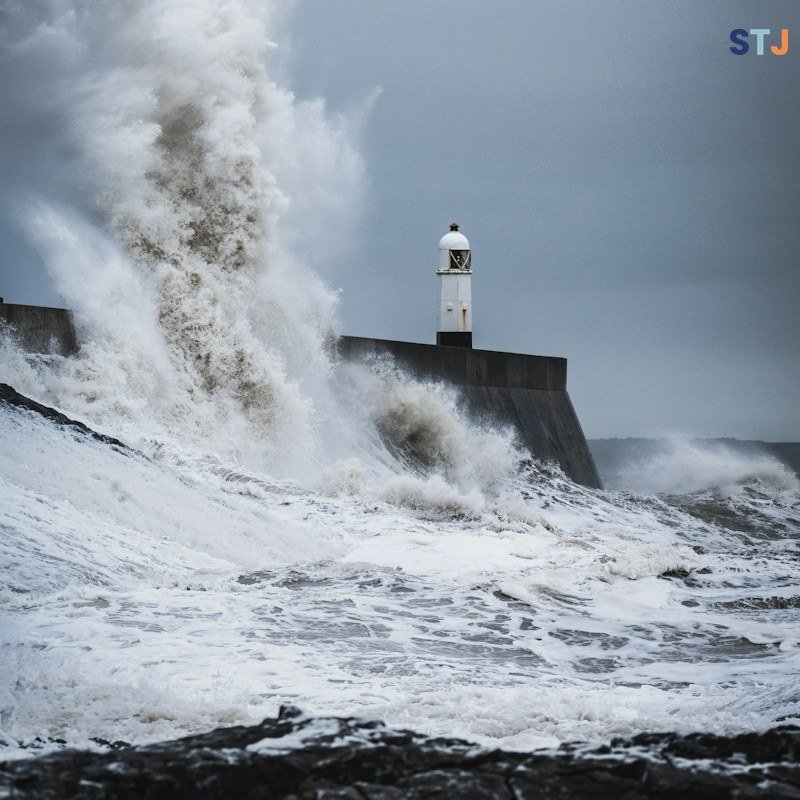
Then the lighthouse appears.
It does not look as if it was placed on the rock. It looks as if it grew out of it.
Cabo Vilán is one of the great icons of Costa da Morte, but its history has little to do with aesthetics. Before it became a backdrop for photographers and travellers, it was a necessity.
Sailing these waters in the 19th century meant facing a dangerous combination: growing maritime traffic, Atlantic storms, fog, reefs and signalling that was still inadequate.
The old Vilán lighthouse did not fully solve the problem. Its location made it hard for the light to be seen from certain navigation sectors.
And the sea kept claiming victims.
On the night of 10 November 1890 came the tragedy that would mark the cape’s history for ever.
The British cruiser HMS Serpent was heading for Africa when a storm drove her towards the coast. Spain’s State Meteorological Agency (AEMET) has reconstructed those conditions using historical data and meteorological reanalysis: poor visibility, a north-westerly ground swell and a strong south-westerly wind sea made navigation extraordinarily difficult. The ship ended up striking the shoals of Punta do Boi. Only three of her 176 crew survived.
The bodies that were recovered were buried near the site of the wreck.
That small enclosure is still there.
The English Cemetery is one of the most moving places on Costa da Morte precisely because it needs no grandeur. A stone wall, a few graves and the constant roar of the ocean are enough.
The Serpent disaster, followed a few years later by other wrecks, made improving the cape’s signalling all the more urgent.
Finally, on 15 January 1896, the new Cabo Vilán lighthouse came into service.
It was no ordinary lighthouse.
It was the first lighthouse in Spain to use electricity. Its system produced light by means of an electric arc between carbon electrodes, an extraordinary innovation for the time. The octagonal tower was built on the rock and connected by a covered passage to the building that housed the keepers and their families. That beam of light was, in a way, technology born of fear.
Fear of hearing once again that another ship had vanished in the night.
Over time the system was modernised. Today Cabo Vilán has a range of approximately 28 nautical miles and remains a key reference for navigation along this stretch of coast. But going there lets you discover something more.
Opposite the tower lies Vilán de Fóra, separated from the mainland by the O Bufardo channel. Waves crash against the granite walls and the wind turns any gentle stroll into something like a negotiation.
The former keepers’ building also houses an interpretation centre devoted to lighthouses, maritime signals and shipwrecks.
It is well worth going in.
Because after looking at photographs, old optics and accounts of sunken ships, you see the landscape differently.
The lighthouse stops being just a pretty silhouette.
The tower, the stairs, the thick granite wall and that light turning every night take on a different meaning.
When a storm arrives and the waves pound Cabo Vilán again, it feels as if the Atlantic is trying to remind us why it had to be built.
And the lighthouse answers in the only way it knows.
By turning on its light.
This article is part of Mónica Romero’s final project for the Master in Travel Journalism at the School of Travel Journalism.
Mónica Romero wrote this piece as the final project of her training at the School of Travel Journalism. If it inspired you, take a look at our Master in Travel Journalism and our Master in Gastronomic Journalism and Communication, watch our students’ travel documentaries on YouTube and listen to their stories on our podcast on Spotify.
← Previous instalment: The Shipwrecks That Named Costa da Morte: 8 True Stories and What Remains of Them Today
Next instalment: Fisterra: The Lighthouse at the End… and the Beginning of Many Lives →
All parts of the “Costa da Morte” series
- 1. The “End of the World” Lighthouses of Costa da Morte: Where the Map Ends and the Atlantic Begins
- 2. A 3–5 Day Lighthouse Route Along Costa da Morte: Scenic Itinerary, Stops and Experiences
- 3. The Shipwrecks That Named Costa da Morte: 8 True Stories and What Remains of Them Today
- 4. Cabo Vilán: The Light Born of Fear and Storms (you are here)
- 5. Fisterra: The Lighthouse at the End… and the Beginning of Many Lives
- 6. Touriñán at Sunset: The Ritual of the Last Light
- 7. The Lighthouse Keeper’s Life: From Isolation to Automation
- 8. Coastal Legends: Raqueiros, Stones with Memory and Other Tales Still Told
- 9. 12 Costa da Morte Viewpoints for Breathtaking Sunsets
- 10. Photographing Lighthouses and Storms on Costa da Morte: Gear, Safety, Framing and Golden Hours