
By Kimberly Domínguez Medina
At first, the research for my final project was going to explore the influence of Latin American food in New York. But, as so often happens, plans changed. The journey turned into an inward route through the culinary history of Puerto Rico. That was when I decided to take a closer look at something that had always been there: what we know as “Chinese food” on the island.
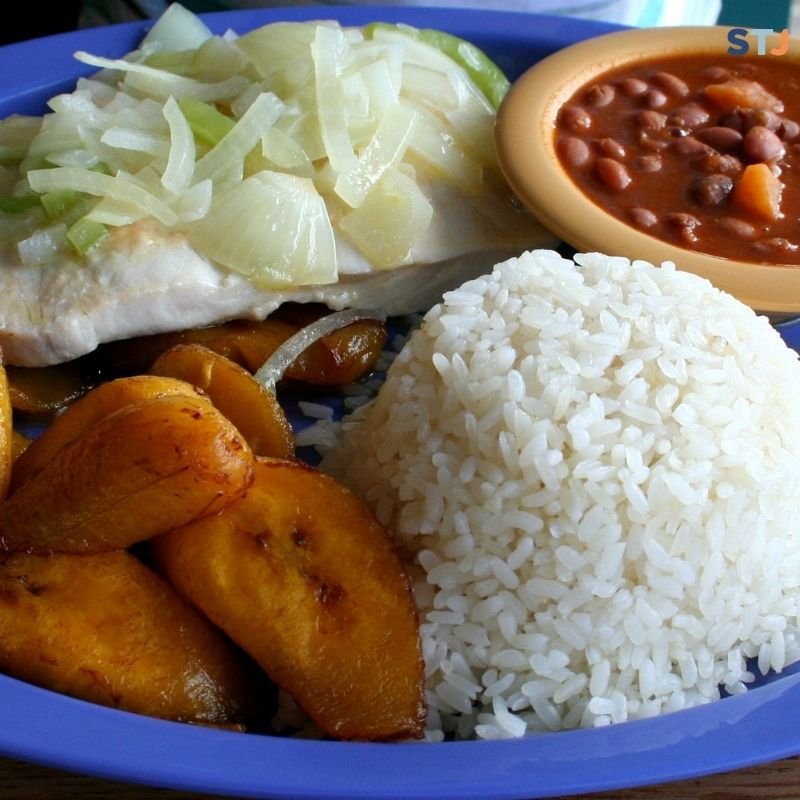
The so-called Puerto Rican “combinación china” is part of everyday life. It’s there at family weekends, on long working days and in those moments when it simply gets you out of a jam. Yet its origins are rarely questioned, and the history of the community that made it possible is seldom made visible. There is also a persistent stigma about its quality, which often dissolves its cultural and historical value.
A bigger community than it seems
During my research, one of the facts that struck me most came up on a visit to the Puerto Rico Institute of Statistics. There I discovered that the Asian community on the island is considerably larger than I had imagined: more than 5,000 people of Asian or Chinese origin live in Puerto Rico. This figure not only surprised me but forced me to rethink the scale of their influence on our daily lives. How can such a significant presence go unnoticed in public conversation?
From political prisoners to road builders
That question led me to dig deeper into their history. In the process I found Los chinos en Puerto Rico by José Lee Borges, a book documenting the arrival of this community on the island. That was when the figure stopped being just a number and became a revelation: many of these immigrants arrived under oppressive conditions. Some were political prisoners, and Puerto Rico served, in practice, as a place of confinement.
Understanding this completely changed my perception. Beyond their culinary contribution, these workers played an essential part in building the island’s infrastructure, including roads we still use today. Their history is marked by struggle, survival and resilience. Many died during the migration, but those who managed to stay found ways to rebuild their lives far from their country of origin.
From adaptation to a hybrid cuisine
Rather than giving in to their circumstances, they chose to adapt. They brought elements of their culture with them and blended them with Puerto Rican culture, giving rise to a new culinary expression. They introduced, for example, the idea of ice cream parlours in town centres and left their mark on the look of their businesses: names, decorations and symbols that are now part of the everyday landscape.
This process of adaptation produced not only affordable food but also a hybrid cuisine that we now recognise as our own. Chinese food in Puerto Rico is not simply “foreign”; in many ways, it is an expression of who we are as a society: a mix of histories, resistance and cultural encounters.
A constant, often invisible presence
I believe it is essential to bring these stories to light, even if this project could not cover all their complexity. Even so, a feature combining testimonies, historical data and visual material has the potential to raise awareness of the real impact of this community. It’s not just about recognising their ability to feed families on tight budgets, but about understanding their place in our collective history.
“The Chinese restaurants never close; they’re always there in our worst moments as a society. They opened after Hurricane María, they open on election days, during the pandemic; they’re always there.”
Rafael Ruiz Mederos
That constant, often invisible presence is precisely what this work seeks to highlight. My hope is that, eventually, this feature will help change the way we see the Asian community in Puerto Rico: that it stops being something we turn to out of convenience and comes to be recognised as an integral part of our cultural and culinary identity.
Kimberly Domínguez Medina wrote this piece as part of their training at the School of Travel Journalism. If it inspired you, take a look at our Master in Travel Journalism and our Master in Gastronomic Journalism and Communication, watch our students’ travel documentaries on YouTube and listen to their stories on our podcast on Spotify.
Interested in writing about travel that explores the extraordinary? Discover the Master in Travel Journalism and the Master in Gastronomic Journalism and Communication at the School of Travel Journalism.