
By José Augusto Ponce Zavala
Here in Cabo Blanco, sitting at a table in the Black Marlin while I waited for my arroz chaufa with seafood — a dish several visitors had recommended to me as a delicious fusion of Asian and regional flavours — I was holding an imaginary conversation with my great friend Ernest Hemingway. I asked him what had brought him here, last century. With a carefree gaze, lost in that altar crowded with bottles which, the locals joked, “always poured a little short”, he replied: “The sea, always the sea.”
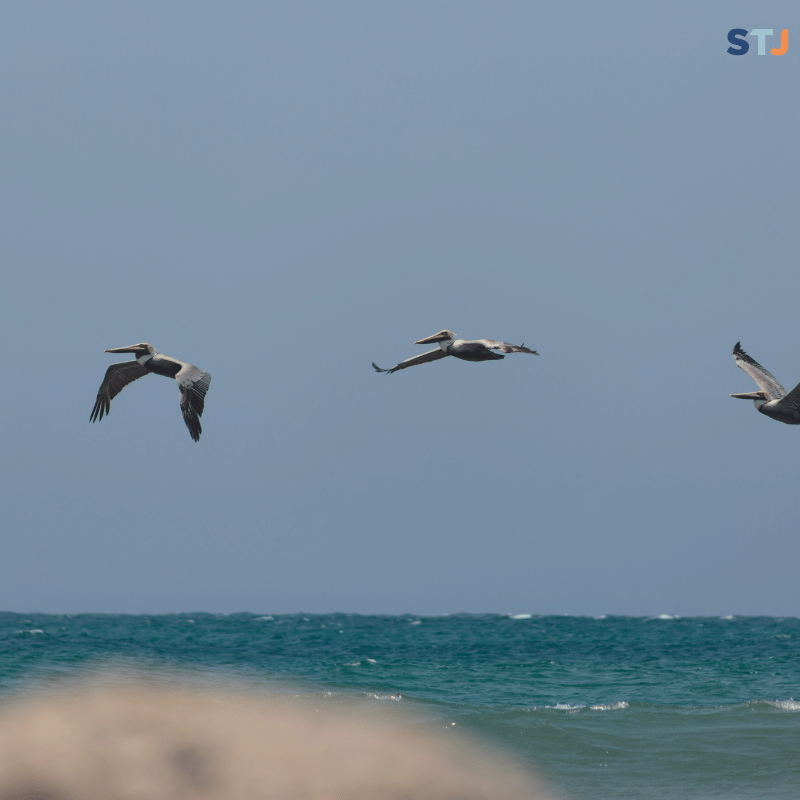
From the first-floor terrace I raised my eyes to the horizon. The breeze seemed to appear by magic, sweeping every corner of the place, while the fishermen’s sailing boats slowly made their way back to the pier, gliding silently over that mirror of sea. Sometimes they were escorted by dolphins leaping gracefully, and by humpback whales which, in season, dance in a language of their own that blends with the soft midday wind.
A few days earlier I had thought I would never get to write this article: the lack of internet signal, the power cuts, the irregular transport timetables and, above all, the difficulty of catching the people I needed to interview all seemed to conspire against me. Even so, I had begun my journey by talking to locals, watching their daily routines and swapping stories. Here, where people can be reserved with visitors who don’t smile much, I always had to keep a tale up my sleeve to coax at least a smile out of them.
First I tried to get my bearings. The historic fishing cove of Cabo Blanco lies in the district of El Alto, in the province of Talara, in the Piura region. It is an ancestral, traditional village whose culinary identity has been built on an intimate relationship with the sea. In this enclave, where the warm waters of the El Niño Current arriving from the north meet the cold waters of the Humboldt Current rising from the south, marine biodiversity shapes not only the economy and daily life but also the flavours of its cooking.
Here, artisanal fishing is the heart of that identity. Fishing with handlines, hooks and light boats has handed down, generation after generation, techniques for selecting and handling fish that are still in use today. From this comes a cuisine built on extreme freshness: ceviche made with freshly caught cabrilla or grouper, tiraditos of tuna or swordfish, chinguirito, sudados cooked over firewood and the traditional chilcano broth that sees the fishermen through the small hours.
But Cabo Blanco’s cooking is not just a set of recipes; it is also cultural memory. It is the story of the women who keep the family kitchens going, of the fishermen who know the rhythms of the sea, and of a community that shares food as an essential part of its collective identity. Each dish holds the essence of a place that has learnt to live amid heavy swells, climate change and alternating seasons of plenty and scarcity.
In recent years, Cabo Blanco has attracted growing interest from tourists. Yet, far from diluting its essence, the community is committed to preserving its knowledge and sustainable practices: respecting closed seasons, promoting local species, using traditional techniques and offering hands-on experiences that bring visitors closer to fishing culture. The aim is for gastronomy not to be a show for tourists, but a bridge to understanding the history and present of the place.
Carrying out this interview in Cabo Blanco turned out to be harder than expected. For a week I tried to reach the people in charge of tourism, but transport problems, poor communication between offices and the shifting schedules of local stakeholders slowed everything down. Although I had prepared an interview script, working on the ground reminded me that field journalism rarely goes to plan.
The main obstacle was the lack of formal channels of communication. Many arrangements had to be made in person and, even then, they did not always coincide with the moments when officials or representatives were available. This forced me to rethink my strategy: walk the cove, approach fishermen and the owners of family restaurants directly, listen before asking and adapt to the local pace.
The most valuable lesson was understanding that gastronomy is not researched only through technique or produce, but through the daily lives of the people who live in a place. The logistical difficulties forced me to stop, observe and open myself up to stories that never appear in official documents. I learnt that patience, empathy and the ability to improvise matter as much as the interview script. And I confirmed that the culinary identity of a destination — in this case, Cabo Blanco — is revealed not only in its dishes, but in its relationships, its silences, the timing of the sea and the way a community chooses to tell its own story.
Interested in writing about travel that explores the extraordinary? Discover the Master in Travel Journalism and the Master in Gastronomic Journalism and Communication at the School of Travel Journalism.