
By Jessica Salas
Can food be discriminated against?
When I read the topics suggested by our lecturer on the master’s programme, one question began to echo in my mind: can discrimination extend to food too? I immediately thought of Nicaragua’s Caribbean coast, a historically marginalised region, and decided to take that reflection all the way to Corn Island and its cooking.
While the Pacific and central departments of Nicaragua, with their Spanish influence, have seen greater economic development, the autonomous regions of the North and South Caribbean remain poorer and are home mainly to Indigenous and Afro-descendant peoples. These communities have suffered discrimination for cultural, linguistic and geographical reasons.
Food has not escaped this exclusion. The platform TasteAtlas recently rated Nicaraguan cuisine the best in Central America, with a score of 3.84 out of 5. The ranking highlighted dishes such as gallo pinto, indio viejo and tres leches. Yet, watching a video that shared the news, I was struck by the absence of a single typical dish from Nicaragua’s Caribbean coast.
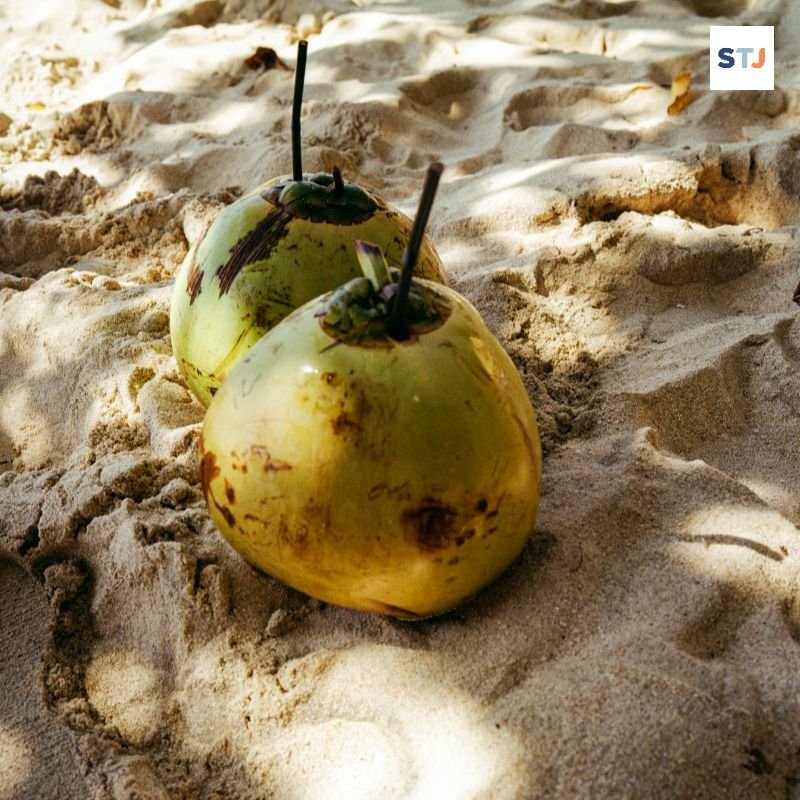
The country’s cuisine is split into two great regions: the Pacific, with Indigenous, Creole and Spanish influences; and the Atlantic, with a rich Afro-Caribbean fusion marked by seafood and the heavy use of coconut. Even so, when people talk about «typical» Nicaraguan food, they almost always mention the same dishes: gallo pinto, nacatamal, vigorón, chancho con yuca, tajadas con queso, arroz aguado and salpicón, among others.
Which leads me to ask: why are dishes such as rondón, fried fish, lobster, patí, crab patties and coconut bread left out? All of them are traditional recipes from the Atlantic coast, mostly made with coconut milk, and they represent a culinary identity of their own that is deeply Nicaraguan.
On Corn Island, a small island in the Nicaraguan Caribbean, cooking reflects history, resistance and identity: rice and beans cooked in coconut milk, rondón, fresh fish, coconut bread, sweets and filled pastries, always with coconut in the starring role. It’s a different culinary tradition, but just as valuable and representative of the country.
Sadly, these Caribbean flavours rarely feature in everyday Pacific cooking, nor are they recognised as part of the national culinary heritage. It’s a banquet that, for all its cultural richness, doesn’t appear on the country’s official menu.
A national menu that needs more Caribbean
I believe there is a cultural tension that determines what counts as «typical food», leaving out a vital part of our diversity. This invisibility is one more reflection of the neglect Nicaragua’s Caribbean coast has historically suffered.
The topic of my final master’s project grew out of this concern: how can I help Nicaraguan gastronomy recognise the Caribbean too? I decided to study the typical dishes of Corn Island to make a concrete proposal for bringing them into the national culinary repertoire.
There may be a disconnect among Nicaraguans themselves that keeps us from seeing ourselves as a whole. But if we aspire to an inclusive national identity, Caribbean cooking must also have a place at the table. That is one of the main goals of my thesis, provisionally titled «Corn Island: a banquet in paradise». Because if we want an authentic representation of our cultural diversity, the national menu needs more Caribbean.
Jessica Salas wrote this piece as part of their training at the School of Travel Journalism. If it inspired you, take a look at our Master in Gastronomic Journalism and Communication and our Master in Travel Journalism, watch our students’ travel documentaries on YouTube and listen to their stories on our podcast on Spotify.
Interested in writing about food and travel beyond the obvious? Discover the Master in Gastronomic Journalism and Communication and the Master in Travel Journalism at the School of Travel Journalism.