
By Ángela Uribe Saavedra
Literary tourism in Chile is still an emerging and little-recognised trend, despite the many opportunities the country offers. Chile stands out for the wealth of its artists and writers, whose creativity has been deeply shaped by its geography and landscapes. Regions such as Araucanía inspired foundational works like Alonso de Ercilla’s La Araucana; Mocha Island has been linked to Herman Melville’s Moby-Dick; and the Lota coal mines gave rise to Baldomero Lillo’s Sub Terra, to name just a few examples.
The Elqui Valley, beyond stargazing
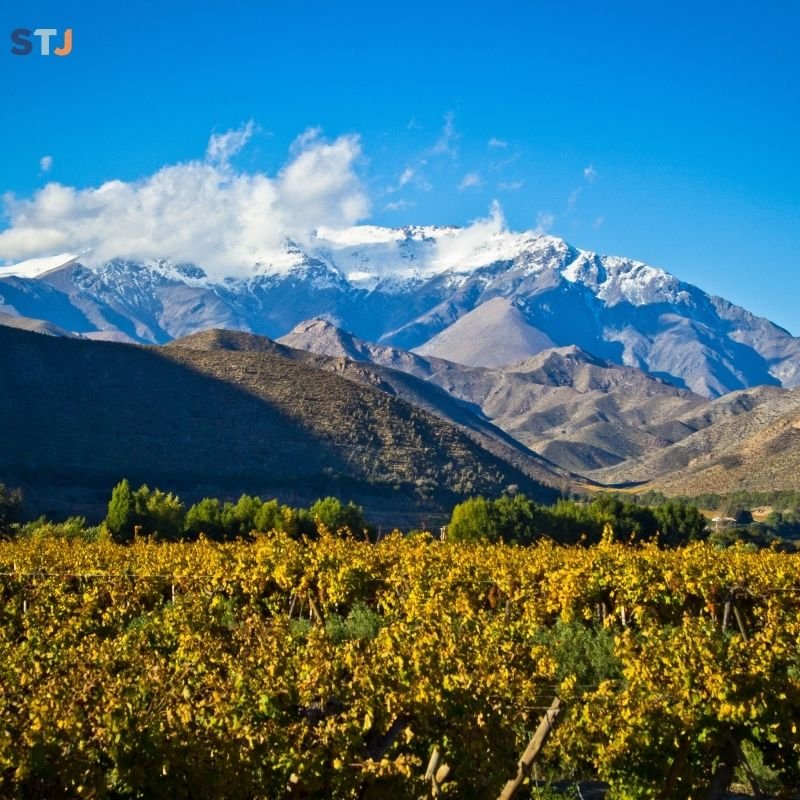
In this context, the Elqui Valley, in the north of the country, is known above all for its clear skies (ideal for astrotourism), its vineyards and distilleries, and its reputed magnetic energy. Within Chile it is marketed as a destination for switching off, wine tourism, stargazing and moderate trekking, such as the trail to the quartz mines. However, there is a fundamental aspect of the valley that has barely been explored from a tourism perspective: its status as the birthplace of Gabriela Mistral, one of Chile’s greatest poets and, to this day, the country’s only female Nobel laureate in Literature.
Gabriela Mistral and the Elqui: an intimate bond
Although there are museums and monuments dedicated to her in Vicuña, her home town, the tourist experience linked to her legacy is largely confined to these places. This contrasts with what has happened on the so-called Poets’ Coast, where a literary route follows the houses and museums of figures such as Pablo Neruda, Nicanor Parra and Vicente Huidobro.
Gabriela Mistral’s work is full of references to the Elqui Valley, a constant source of inspiration for some of her most intimate and sensitive lines, as she writes in Pensando a Chile:
“Our homeland is childhood: the sky, the soil and the atmosphere of childhood… I still speak my Spanish with the lilt of the Elqui Valley; I cannot have any eyes other than those the light of the Elqui Valley shaped in me; my sense of smell comes from those vineyards and fig groves, and even my sense of touch came from those hills with their sweet grass or wild grass.”
The figure of Gabriela Mistral is intrinsically linked to the Elqui Valley, in the Coquimbo region. And yet she seems to occupy a secondary place in the area’s tourism offer. The poet’s rural upbringing, deeply marked by this land, comes through clearly in texts such as her Recado de nacimiento (Message on a birth):
Pienso ahora en las cosas pasadas,
en esa noche cuando ella nacía
allá en un claro de mi cordillera.
Yo soñaba una higuera de Elqui
que manaba su leche en mi cara.
El paisaje era seco, las piedras,
mucha sed, y la siesta, una rabia.
(Now I think of things gone by, / of that night when she was born / there in a clearing of my mountains. / I dreamt of an Elqui fig tree / pouring its milk on my face. / The landscape was dry, the stones, / great thirst, and the siesta, a rage.)
A literary route waiting to be built
Gabriela Mistral’s literary importance and her constant remembrance of the Elqui Valley open up opportunities for tourism and cultural development. These include podcasts, audiovisual pieces and documentaries linking her verses to specific places in the valley. Such initiatives would make it possible to build a territorial narrative that directly connects the poet’s work with her place of origin, aimed at a literary tourism niche with a genuine interest in literature and in the relationship between landscape and art. The goal: a culturally immersive experience that gives the territory new meaning from a literary perspective.
To achieve this, the proposal is to carry out a thorough survey of Mistral’s work in order to catalogue every verse, poem and article in which she refers explicitly or symbolically to the Elqui Valley. From that analysis, stories could be built that connect the texts with the physical places to be promoted. In the medium and long term, the proposal could scale up through collaboration with tour operators able to develop “literary routes” through the Elqui Valley, consolidating an offer based on storytelling, literary heritage and territorial identity.
Ángela Uribe Saavedra wrote this piece as part of their training at the School of Travel Journalism. If it inspired you, take a look at our Master in Travel Journalism and our Master in Gastronomic Journalism and Communication, watch our students’ travel documentaries on YouTube and listen to their stories on our podcast on Spotify.
Interested in writing about travel that explores the extraordinary? Discover the Master in Travel Journalism and the Master in Gastronomic Journalism and Communication at the School of Travel Journalism.