
By Mónica Romero
“Costa da Morte” series · Part 7 of 10. A series by Mónica Romero, written as part of her final project for the Master in Travel Journalism at the School of Travel Journalism (2026).
The image belongs almost to a universal imagination.
A white tower facing the sea. A man living practically alone. Stormy nights. Endless stairs. And, every evening, the responsibility of switching on a light on which the lives of those sailing far out at sea might depend.
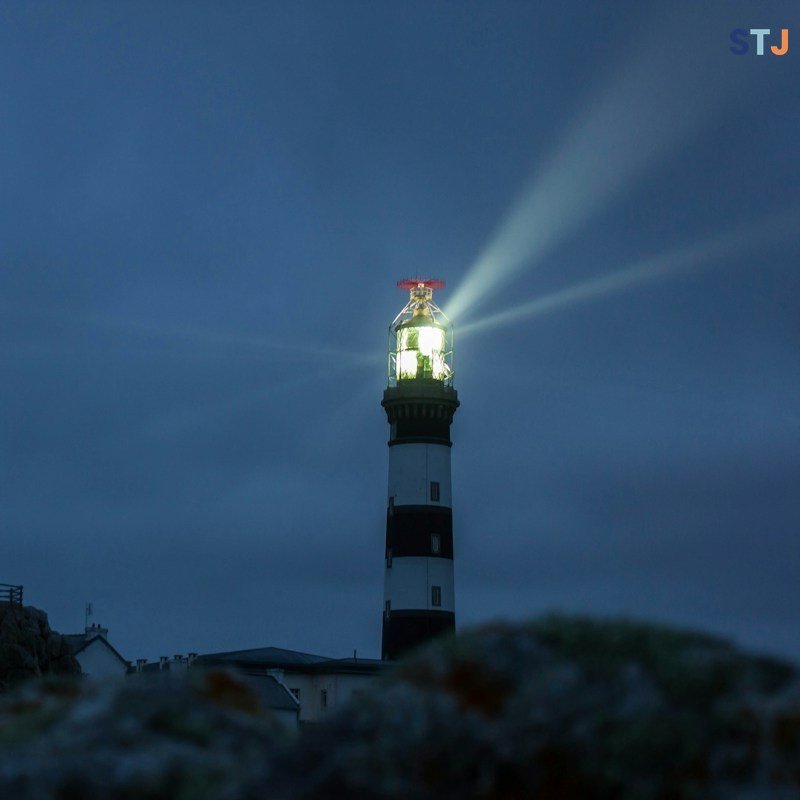
The lighthouse keeper is one of those trades that seem to have been invented by a novelist.
But it existed.
And, in a way, it still does.
For much of the modern history of lighthouses, keeping a maritime signal running required a permanent human presence. Lenses had to be cleaned, mechanisms checked, lamps fuelled, repairs carried out, and the light guaranteed to work every single night.
At the most isolated sites, that meant moving an entire life to the lighthouse.
Family life included.
The dwellings that can still be seen beside many towers recall that era. Cabo Vilán is a good example: the building where the keepers and their families lived is connected to the tower by a covered walkway that allowed access even in foul weather.
The romantic image, however, hides the hardship.
Isolation, damp, wind, difficulty in receiving supplies and a responsibility that did not end when the working day did.
If the light failed at three in the morning, it had to be fixed.
Because someone might be out there at sea.
Technology gradually transformed that world.
Oil gave way to more efficient fuels; then came electricity. Optical systems improved, and motors, generators, sensors and, finally, remote monitoring systems appeared.
Cabo Vilán was once again ahead of its time when, in 1896, it became the first electric lighthouse in Spain. A century later, the transformation would run much deeper.
The port reforms of the 1990s and automation changed the trade for good. The traditional lighthouse keeper gradually gave way to the aids-to-navigation systems technician.
The name has rather less literature to it.
The job, a great deal more electronics.
Today, maintaining aids to navigation involves remote-control systems, electrical installations, generator sets, communications, maintenance planning and technical supervision. Puertos del Estado integrates these signals into a regulated network within international standards for aids to navigation.
That does not mean the lighthouses have been abandoned.
Technicians still visit them in person, checking installations and carrying out maintenance. Some professionals describe a job increasingly tied to computers, remote control and planning, although regular trips to the towers remain necessary. The trade has changed because navigation has changed too.
Ships now carry GPS, electronic charts, radar and automatic systems capable of determining their position with enormous precision.
Does that mean the lighthouse is no longer useful? Not exactly.
Light signals remain an independent and direct aid. They are an instantly understandable visual reference and form part of navigation systems designed precisely to provide redundancy.
And then there is another function that nobody planned when they were built.
The cultural one.
Lighthouses have become heritage sites, museums, accommodation, interpretation centres and tourist destinations.
Thousands of people reach them without ever having sailed.
Perhaps that is the most beautiful paradox in their history.
For generations they were built so that those at sea would know where land was.
Today we travel from land to find them and look out to sea.
The solitary lighthouse keeper has all but disappeared. The light remains.
This article is part of Mónica Romero’s final project for the Master in Travel Journalism at the School of Travel Journalism.
Mónica Romero wrote this piece as the final project of her training at the School of Travel Journalism. If it inspired you, take a look at our Master in Travel Journalism and our Master in Gastronomic Journalism and Communication, watch our students’ travel documentaries on YouTube and listen to their stories on our podcast on Spotify.
← Previous instalment: Touriñán at Sunset: The Ritual of the Last Light
Next instalment (26 November): Coastal Legends: Raqueiros, Stones with Memory and Other Tales Still Told →
All parts of the “Costa da Morte” series
- 1. The “End of the World” Lighthouses of Costa da Morte: Where the Map Ends and the Atlantic Begins
- 2. A 3–5 Day Lighthouse Route Along Costa da Morte: Scenic Itinerary, Stops and Experiences
- 3. The Shipwrecks That Named Costa da Morte: 8 True Stories and What Remains of Them Today
- 4. Cabo Vilán: The Light Born of Fear and Storms
- 5. Fisterra: The Lighthouse at the End… and the Beginning of Many Lives
- 6. Touriñán at Sunset: The Ritual of the Last Light
- 7. The Lighthouse Keeper’s Life: From Isolation to Automation (you are here)
- 8. Coastal Legends: Raqueiros, Stones with Memory and Other Tales Still Told
- 9. 12 Costa da Morte Viewpoints for Breathtaking Sunsets
- 10. Photographing Lighthouses and Storms on Costa da Morte: Gear, Safety, Framing and Golden Hours
[…] Previous instalment: The Lighthouse Keeper’s Life: From Isolation to AutomationNext instalment (28 November): 12 Costa da Morte Viewpoints for Breathtaking Sunsets […]