
By Nasser Al-Dhaheri
Folkloric Tbourida Celebration Why This Festival? The Tbourida festival is one of the most exciting and beautiful cultural, artistic, and sporting festivals to photograph, set against a magical traditional backdrop marked by the movement of horsemen and the pounding of hooves on sand. It showcases national costumes and traditional dishes, creating a diverse and colorful celebration under the sun, all enhanced by the grace of horses and riders.
The Tbourida in Morocco is considered one of the ancient traditional folk festivals, passed down through generations and still receiving support and encouragement, as it represents a traditional heritage that attracts tourists. It reflects the traditions of horsemanship and local culture, featuring equestrian displays where horsemen demonstrate their skills in riding, taming, and racing, along with firing traditional firearms adorned with their vibrant traditional outfits and colorful turbans, and their beautifully decorated horses.
The term “Tbourida” linguistically derives from the word “gunpowder.” This ancient art of horsemanship dates back to the 15th century and reenacts a military attack launched by Arab and Amazigh horsemen against their enemies. Tbourida preserves a strong spiritual dimension, particularly as it places the horse—a sacred animal in Islam—at the heart of this captivating spectacle.
During this festival, horsemen fire gunshots from traditional rifles as part of their performance, creating a festive atmosphere amidst the clouds of hoof dust and the gray smoke from the firearms, resulting in cinematic scenes that are truly magnificent. Various cavalry teams participate in the festival, competing in performances that showcase the diversity of horsemanship styles and riding techniques. This is accompanied by musical performances and traditional dances, enhancing the celebratory atmosphere and bringing a sense of joy and happiness.
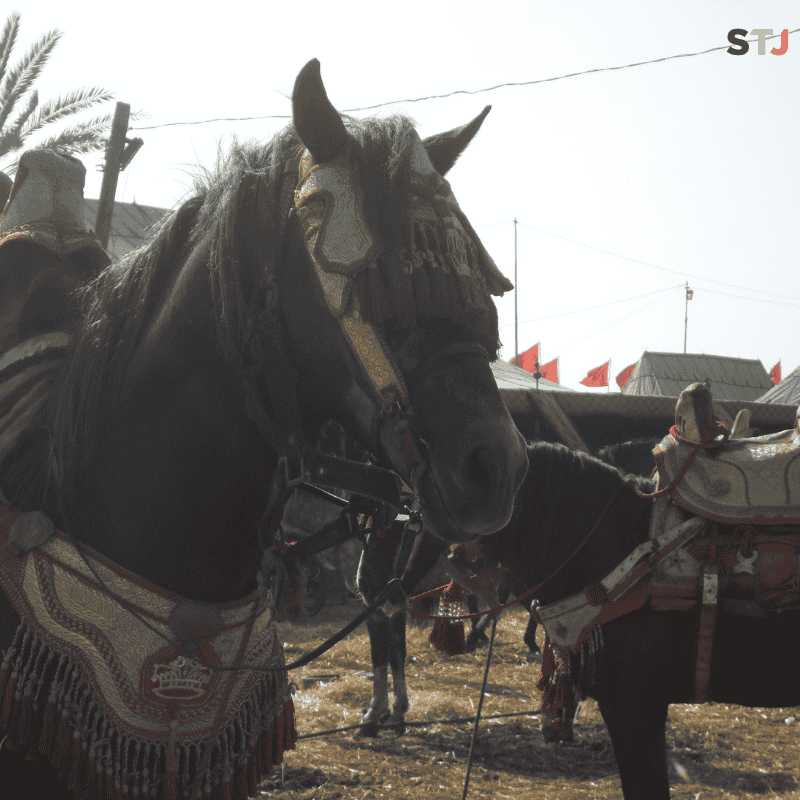
Alongside this, there are local markets showcasing traditional crafts and handmade products, as well as diverse popular dishes. Visitors can savor traditional Moroccan cuisine during the festival, enjoying delicious Moroccan tea made from green tea, mint, and sugar, all within an ambiance rich in Moroccan traditions and Arabic hospitality, characterized by warmth and welcome. This reflects the authentic cultural values of Moroccan society, attracting a large number of visitors and tourists. Locals benefit economically from the event, enjoying the excitement of competition and social gatherings, as the Tbourida festival symbolizes Morocco’s cultural heritage and reinforces national identity by celebrating ancient horsemanship traditions.
Challenges in Capturing the Tbourida Festival
Photographing the Tbourida festival presents several challenges that may affect the quality of images and their ability to embody the atmosphere and culture.
Here are some of the main difficulties I encountered:
1. Rapid Movement: The Tbourida performances are characterized by quick and lively action, making it challenging for the photographer to capture perfect moments. This demands high skill in fast-paced photography and focus, often requiring the use of multiple lenses and cameras to achieve diverse and comprehensive shots.
2. Variable Lighting: Light levels change throughout the day and depending on weather conditions; bright sunlight or low light can complicate matters. Photographers must adjust their camera settings continuously or rely on automatic shooting modes to cope with these variations.
3. Crowd Dynamics: Festivals attract large crowds of visitors and participants, which can obstruct the photographer’s movement and make finding suitable shooting angles difficult. Additionally, unwanted individuals may appear in the frame, but with new technologies, editing and touch-ups can be performed to resolve such issues.
4. Cultural Sensitivity: Photographers must adhere to specific cultural norms related to the celebration and horsemanship. They should avoid startling horses with flash photography or excessive movement, staying alert and respectful of Moroccan customs to prevent any actions that may be seen as inappropriate or upset people.
5. Anticipating Challenges: Photographers should be prepared for inherent challenges, such as maintaining focus, selecting ideal angles, managing weather fluctuations, and ensuring their equipment and techniques are suitable for the environment.
6. Balancing Elements: Achieving balance among various elements in the festival is crucial. Photographers need to consider horsemen, weapons, costumes, faces, and details while searching for negative space and quick reactions to spontaneous movements from the audience.
Example Details “Photos” from the Tbourida Festival:
– The traditional Moroccan tea maker with his silverware, colored glass cups, and unique pouring technique.
– The water seller with a skin water bag and copper basin, wearing a decorated traditional hat and simple folk attire.
– The elderly bread maker by the fire oven.
– A moment capturing an experienced rider with his young son, who is a budding equestrian.
7. Capturing Emotion and Intimacy: Photographers should pay attention to human interaction, emotions, and intimate moments that reflect human experience and connections to the space around them—such as laughter, tears, cheers, and enthusiastic encouragement—all of which can powerfully resonate with viewers.
Through navigating these challenges, capturing the essence of the Tbourida festival provides both a rewarding and enriching experience, celebrating the deep cultural heritage of Morocco through the lens of a devoted photographer.
This article is part of the practical work carried out by students on the Master’s Degree in Travel Journalism at the School of Travel Journalism.