
By Leonor Assunção
Into the mouth of the wolf. That was the masterclass’s title.
Then it started. A boy with a horse travelling for 111 days from Italy to Finisterre.
“Nowadays?! No way! That guy must have travelled in time and landed in the wrong year,” I thought, as I imagined him dressed in 17th-century fashion, wearing a feathered hat and riding a horse across the fields. Maybe a D’Artacán, lost in our world.
Instead, a well-informed young man appeared on my Zoom screen, his reddish-blonde, spiky hair giving him a cheeky look that contrasted with his fluent, experienced and compelling speech, and an inspiring talk began.
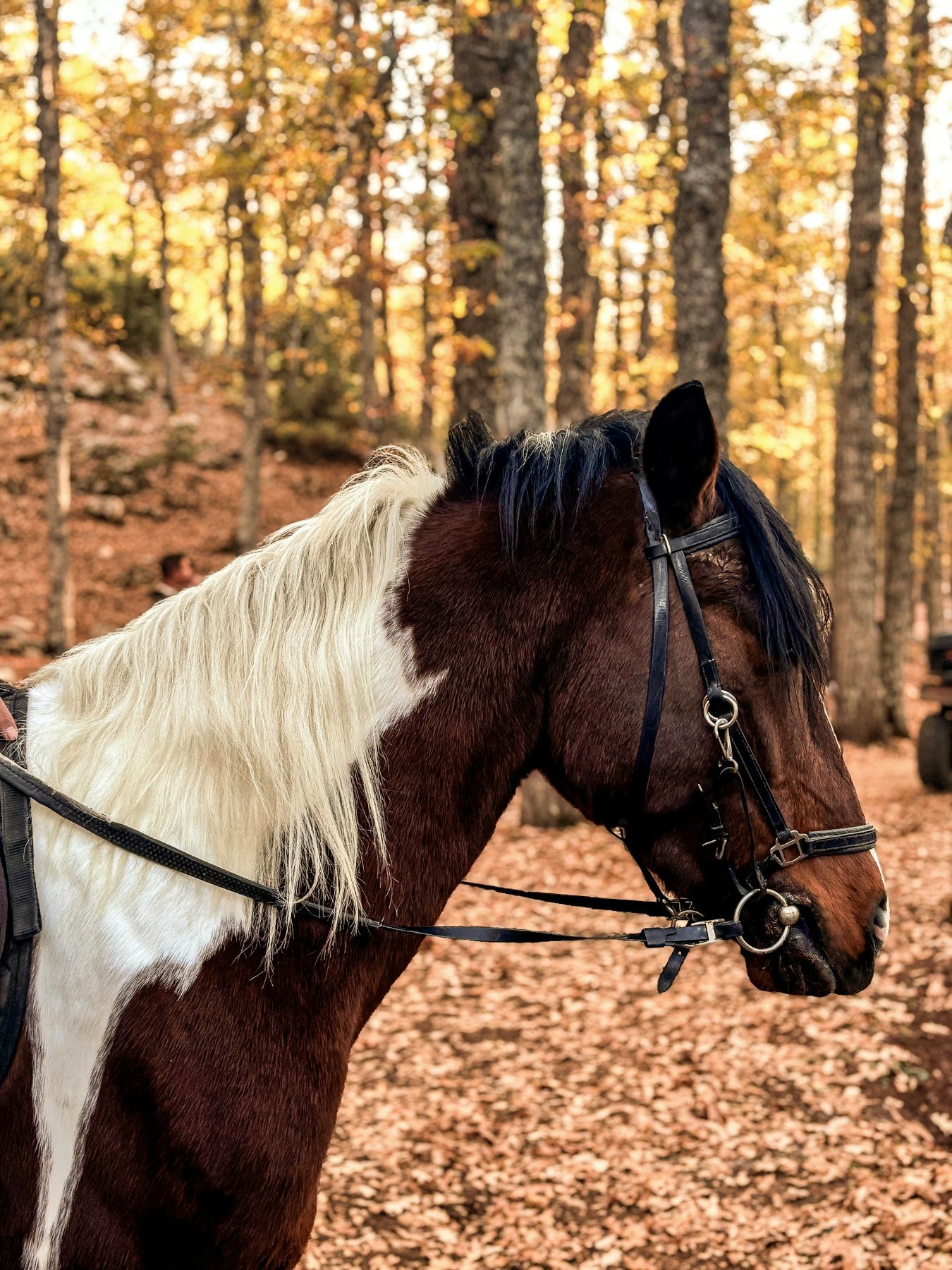
On 5 November, during a masterclass organised by the School of Travel Journalism, we had the privilege of riding with Louis D. Hall on the back of Sasha, his horse, on a journey of discovery and self-guidance.
Back to the essence of slow travel
For an hour and a half, we went back to the essence of slow travel and the narrative of travel writing. Not the narrative you scroll through in thousands of posts aiming to collect an equal number of likes, but the one that lives in long-form writing. The reading you do on a Sunday, in your slippers, with a mug of coffee and light drifting through your window. The kind of narrative that sparks unexpected reflections and change.
Shifting away from fast-paced, overcrowded tourism, Louis rode Sasha at a steady, calm pace and led us towards deep, immersive observation: an intentional trip in which, using our senses, he slowly drew us into absorbing everything around us.
A journey where, leaving the GPS aside, we recalled the pleasure of asking a stranger who doesn’t speak our language how to get there. Of meeting other people. Of getting lost and enjoying the unexpected moments that become the most memorable experiences of our travels.
Refusing endless to-do lists, we let ourselves experience our itinerary authentically, just for the pleasure of doing it. Along the way, we cherished endless sunsets immortalised in memorable photographs and tasted new foods and cultures.
Using our unique lenses, we truly connected with the world and let story ideas and pitches emerge when we least expected them. The dots were connected.
Into the mouth of the wolf
Swaying on the horse’s back to the rhythm of our journey, we slowly moved towards our writer’s anxiety. Was I not the only one feeling it? Wow! It felt good to know, and I was eager to get into the wolf’s mouth.
We took our pens and let our ideas drift onto the paper, digging into our memories and embracing the creative power of fiction and early childhood inspirations, such as Louis’s Don Quixote. And my family’s lunches and their endless adventurous stories.
We moved from the joy of writing to the discipline of treating it as a rigorous, full-time professional practice that requires patience and daily training. It is exactly when we don’t feel like it and still manage to do it that we build the resilience to accept new challenges and achieve our purpose, our guide advised.
We went back to reading and nourished our imagination, creating fertile soil for ideas to germinate naturally instead of forcing a prescribed narrative onto an experience.
We balanced feeling and observation by using a notebook and pen to record fleeting details, tiny interactions and sensory perceptions: raw material that we could synthesise into compelling narratives months or years later.
A diary is an excellent tool to draw the world as we see it, the boy on the horse reminded us. I used to have one, I recalled. I used to have long talks with it. When did I let it fade away? When did I lose my childish self-reflections?
Pitches, rejection and self-compassion
We went on. From broad summaries, we moved to capturing intimate, human-scale moments that bring readers directly into the scene. We explored the immense power of narrative introductions and conclusions to craft endings that resonate and linger with the reader.
We crossed the pitching frontier, accepting mistakes and practising self-compassion when facing rejection. We acknowledged that most of the time it comes not from incapacity, but from inexperience and not knowing how to make our way.
Don’t look to your side or to the top. Look back, appreciate your unique journey, the long way you’ve come to arrive where you are. And look forward to your destination. Be good to yourself.
There it was: the crafted ending of a journey that resonated and lingered with me.
On Sasha’s back, driven by Louis D. Hall, we travelled through a field of senses and light. We went into the mouth of the wolf, faced our fears and bad feelings, conjured and healed. And we let a renewed power emerge: the power of feeling and seeing the world through our own genuine purpose, and of imprinting it with our own words and memories. A power long given to humans, and one that so much haste and technology have stripped of meaning.
On Louis’s website, a quote from The Herald states: “Hall is a poetic and vivid writer, alert to the world around him, and to others… In Green is a captivating account of discovery.” As for Louis, I agree. He is all that and, I would add, an inspiring wind of change.
As for In Green, it is now in my library. It is, of course, my next read, if only for the indelible impression the author left on me and the dozens of reviews it has received. Both tell me it is an exceptional piece of slow, long-form reading.
As for my next piece of writing… well, I got my diary back: this is its first page! Thank you, Louis D. Hall.
Leonor Assunção wrote this piece after the masterclass that travel writer Louis D. Hall gave at the School of Travel Journalism on 5 November 2026, as part of her training in the Master in Gastronomic Journalism and Communication. Louis D. Hall is the author of In Green: Two Horses, Two Strangers, a Journey to the End of the Land; you can follow him on Instagram at @louisdhall.
Want to turn your journeys into stories that get published? Discover the Master in Travel Journalism and the Master in Gastronomic Journalism and Communication at the School of Travel Journalism.