
By Mónica Romero
“Costa da Morte” series · Part 9 of 10. A series by Mónica Romero, written as part of her final project for the Master in Travel Journalism at the School of Travel Journalism (2026).
There are places from which you look at a landscape.
And others from which the landscape seems to be looking at you.
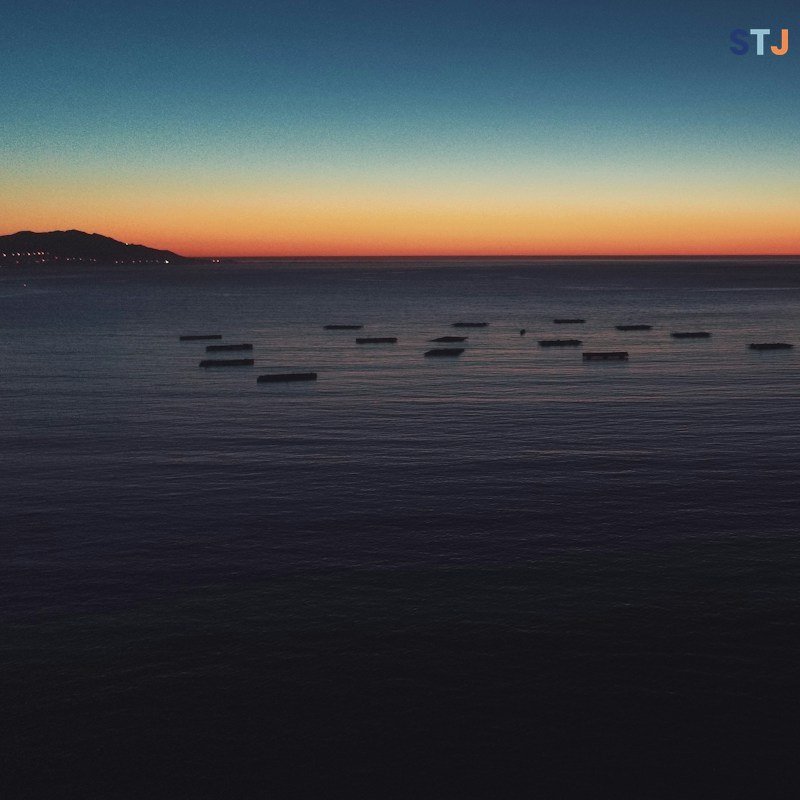
Costa da Morte is full of them.
Not all of them are official viewpoints. Some are lighthouses, capes, hills or simply places where it is worth stopping and waiting for the light to change.
This is not meant to be a ranking. The best one will depend on the day, the wind, the clouds and, above all, on who is looking.
1. Punta Nariga
The most modern lighthouse in Galicia is also one of the most photogenic. Its architecture recalls the prow of a ship sailing into the Atlantic. At sunset, the lines of the building let you play with silhouettes as the sun drops straight into the sea.
2. Punta do Roncudo
Here the experience is one of sound.
The name comes precisely from the hoarse roar (ronco) of the sea breaking against the rocks. The crosses remembering percebeiros — goose-barnacle gatherers — who lost their lives turn the landscape into something more than a postcard.
3. Monte Branco
One of the most complete viewpoints in the north of Costa da Morte. From here you can see the mouth of the river Anllóns, Barra beach and practically the whole ria of Corme e Laxe.
4. Laxe Lighthouse
A simple, accessible viewpoint with an extraordinarily wide panorama. Turismo de Galicia notes that from here you can take in a large stretch of the coast between O Roncudo and Punta do Boi, in Camariñas.
5. Traba beach and its boulders
Here the horizon appears behind one of the most unusual landscapes in the area: a lagoon, dunes and enormous granite formations. It is a place to arrive at before sunset and walk.
6. Trece cove
Few images sum up Costa da Morte better.
The beach, the dunes, the Cemiterio dos Ingleses (English Cemetery) and an ocean that rarely seems entirely calm. More than a specific viewpoint, it is a landscape you discover as you walk.
7. Cabo Vilán
Probably the most dramatic setting on the whole route.
The granite tower and the islet of Vilán de Fóra work extraordinarily well when the last rays break through the clouds. In a storm, the scene is spectacular — though always from a safe distance.
8. Monte Corpiño, Muxía
This small hill offers a magnificent view over Muxía, the sanctuary of A Virxe da Barca and the surrounding sea. Turismo de Galicia lists it as one of the town’s great panoramic spots.
9. Punta da Barca
Here it is hard to separate landscape from culture.
The sanctuary, the legendary stones, the ocean and the sculpture A Ferida create one of the most recognisable settings on Costa da Morte.
10. Cabo Touriñán
If you had to choose one place devoted solely to the sunset, it would probably be this one.
From roughly 24 March to 23 April and from 18 August to 19 September, this part of Costa da Morte witnesses the last sunset in continental Europe.
11. Cabo Fisterra and O Veladoiro
The lighthouse is the best-known spot, but gaining height widens the landscape enormously. From around O Veladoiro, the Fisterra peninsula stops being merely a cape and starts to make geographical sense.
Here, too, you can watch the last continental sunset at certain times of the year.
12. O Ézaro viewpoint
Perfect for ending the route.
From the top you can make out the mouth of the Xallas, Monte Pindo, the Atlantic and, in the distance, Cabo Fisterra.
The most interesting thing about these twelve places is that no sunset is guaranteed.
Galicia does not work like that.
We may arrive looking for an orange sky and find fog.
A cloud may cover the sun just as it begins to touch the horizon.
Or it may rain all day and, five minutes before sunset, a strip of light may appear beneath the clouds, capable of setting the whole sky ablaze.
That is part of the magic. Costa da Morte forces the photographer and the traveller to accept that they do not control the landscape. They can only be there. And wait.
And, every now and then, get lucky.
This article is part of Mónica Romero’s final project for the Master in Travel Journalism at the School of Travel Journalism.
Mónica Romero wrote this piece as the final project of her training at the School of Travel Journalism. If it inspired you, take a look at our Master in Travel Journalism and our Master in Gastronomic Journalism and Communication, watch our students’ travel documentaries on YouTube and listen to their stories on our podcast on Spotify.
← Previous instalment: Coastal Legends: Raqueiros, Stones with Memory and Other Tales Still Told
Next instalment (30 November): Photographing Lighthouses and Storms on Costa da Morte: Gear, Safety, Framing and Golden Hours →
All parts of the “Costa da Morte” series
- 1. The “End of the World” Lighthouses of Costa da Morte: Where the Map Ends and the Atlantic Begins
- 2. A 3–5 Day Lighthouse Route Along Costa da Morte: Scenic Itinerary, Stops and Experiences
- 3. The Shipwrecks That Named Costa da Morte: 8 True Stories and What Remains of Them Today
- 4. Cabo Vilán: The Light Born of Fear and Storms
- 5. Fisterra: The Lighthouse at the End… and the Beginning of Many Lives
- 6. Touriñán at Sunset: The Ritual of the Last Light
- 7. The Lighthouse Keeper’s Life: From Isolation to Automation
- 8. Coastal Legends: Raqueiros, Stones with Memory and Other Tales Still Told
- 9. 12 Costa da Morte Viewpoints for Breathtaking Sunsets (you are here)
- 10. Photographing Lighthouses and Storms on Costa da Morte: Gear, Safety, Framing and Golden Hours