
By Mónica Romero
“Costa da Morte” series · Part 3 of 10. A series by Mónica Romero, written as part of her final project for the Master in Travel Journalism at the School of Travel Journalism (2026).
Costa da Morte has an extraordinary capacity for producing legends. But its real maritime history is dramatic enough to need no embellishment.
Rocky shoals, Atlantic storms, fog, coastal navigation and maritime signalling that was inadequate for centuries turned this shoreline into the scene of hundreds of accidents.
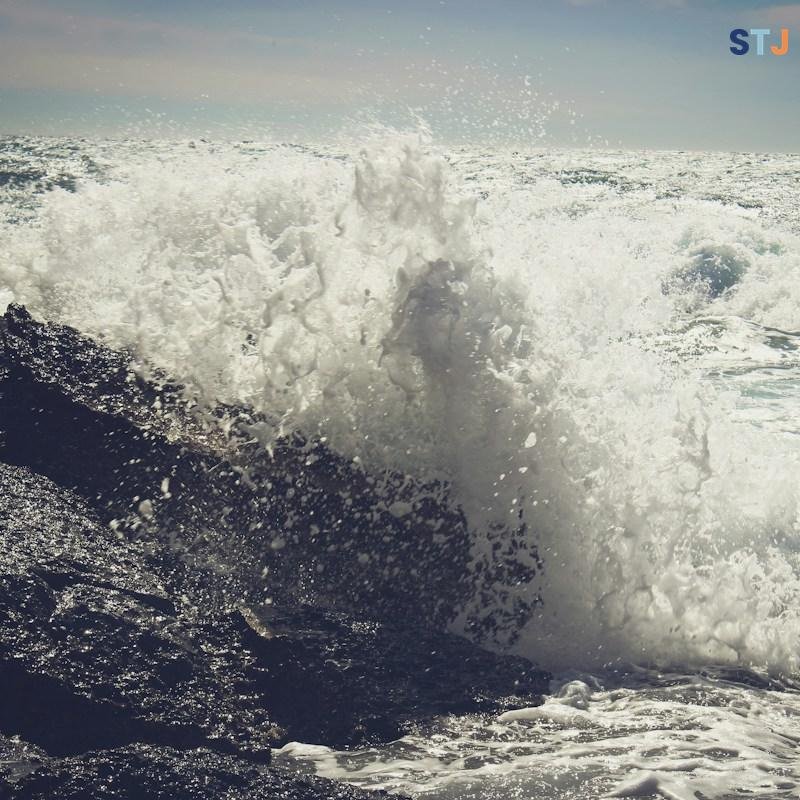
Behind the statistics there are names.
1. RMS Solway, 1843
On the night of 7–8 April 1843, the British steamer Solway struck the Baldaio shoals. She was one of those early great steamships linking Europe and the Americas. Thirty-five people died and 98 survived, according to the records compiled on the wreck. Decades later, the seabed was still giving back pieces of her story: in 2019 the Spanish Navy’s diving unit recovered an old sextant from the wreck.
2. Great Liverpool, 1846
Three years later, the Great Liverpool was sailing from Alexandria to Southampton when she sprang a leak off Fisterra and ran aground at Gures, in Cee. Around 150 people were on board and three lost their lives. P&O’s own historical archives preserve an account of the accident.
Today her story is part of the area’s underwater heritage.
3. HMS Captain, 1870
The Captain was one of the most innovative ships in the Royal Navy… and she also had serious stability problems.
During a storm off Fisterra in September 1870, she heeled over until she capsized. Only 18 men survived; around 480 died.
The tragedy proved that even the most advanced technology could not defy the ocean with impunity.
4. HMS Serpent, 1890
This is probably the most symbolic shipwreck on Costa da Morte.
On 10 November 1890, HMS Serpent struck the shoals of Punta do Boi in a violent storm. Of the 176 men on board, only three survived.
The bodies that were recovered were buried beside the sea.
That small enclosure is today the Cementerio de los Ingleses, the English Cemetery.
5. City of Agra, 1897
Seven years later, another British ship was wrecked near Arou.
The City of Agra was lost amid fog, storm and heavy swell. Historical sources disagree on some of the casualty figures, but they agree on the extraordinary rescue carried out by the fishermen of Camelle, some of whom received British decorations.
Part of the ship still remains on land: her bell was donated to the church of Divino Espírito Santo in Camelle, where it hangs to this day.
6. Nil, 1927
Not every story ended mainly in human tragedy.
The French cargo ship Nil ran aground near Arou in 1927 carrying an extraordinarily varied cargo: cars, machinery, fabrics, pharmaceuticals, flour, champagne and other goods.
Part of that cargo ended up on land, and for generations the wreck was remembered through stories about the objects recovered from the sea.
7. Banora, 1965
On 18 November 1965, the Moroccan cargo ship Banora sank south of Cabo Vilán.
The sailors of Muxía managed to rescue her crew.
Then came an almost surreal scene: the ship was carrying some 1,600 tonnes of oranges, and the sea began to fill the coast with fruit. For days, the oranges became part of the landscape and of family stories.
8. Prestige, 2002
The last great shipwreck to transform the memory of this coast belongs to our own time.
The Prestige sent out her first distress signal on 13 November 2002, when she was 27 nautical miles west of Cabo Touriñán. She was carrying some 77,000 tonnes of heavy fuel oil. Six days later she broke in two and sank to a depth of around 3,600 metres.
The spill reached hundreds of beaches and sparked a huge wave of public mobilisation. In Galicia alone, 505 of its 723 beaches were affected, according to official figures.
In Muxía, the sculpture A Ferida (“The Wound”) commemorates the disaster and those who took part in the clean-up.
That is why travelling along Costa da Morte also means walking on memory.
Sometimes it appears in a cemetery.
Sometimes in a bell.
And sometimes simply in a story that someone still remembers because their grandfather swore that, for a few days in 1965, the Atlantic was covered in oranges.
This article is part of Mónica Romero’s final project for the Master in Travel Journalism at the School of Travel Journalism.
Mónica Romero wrote this piece as the final project of her training at the School of Travel Journalism. If it inspired you, take a look at our Master in Travel Journalism and our Master in Gastronomic Journalism and Communication, watch our students’ travel documentaries on YouTube and listen to their stories on our podcast on Spotify.
← Previous instalment: A 3–5 Day Lighthouse Route Along Costa da Morte: Scenic Itinerary, Stops and Experiences
Next instalment: Cabo Vilán: The Light Born of Fear and Storms →
All parts of the “Costa da Morte” series
- 1. The “End of the World” Lighthouses of Costa da Morte: Where the Map Ends and the Atlantic Begins
- 2. A 3–5 Day Lighthouse Route Along Costa da Morte: Scenic Itinerary, Stops and Experiences
- 3. The Shipwrecks That Named Costa da Morte: 8 True Stories and What Remains of Them Today (you are here)
- 4. Cabo Vilán: The Light Born of Fear and Storms
- 5. Fisterra: The Lighthouse at the End… and the Beginning of Many Lives
- 6. Touriñán at Sunset: The Ritual of the Last Light
- 7. The Lighthouse Keeper’s Life: From Isolation to Automation
- 8. Coastal Legends: Raqueiros, Stones with Memory and Other Tales Still Told
- 9. 12 Costa da Morte Viewpoints for Breathtaking Sunsets
- 10. Photographing Lighthouses and Storms on Costa da Morte: Gear, Safety, Framing and Golden Hours