
By Lourdes Castellanos
In life there are universal languages that everyone understands. When I think of them, two great examples come to mind: food and music. This time I will focus on telling you how a commercial (even political) relationship turns into collaboration and friendship.
Cooking needs no translation: it is understood through aroma, flavour and memory. In this universal language full of roots and nuances, Mexico and the United States have been in conversation for more than a century (at least). Today, this culinary dialogue can be seen in more ingredients travelling across the border in both directions, more chefs exploring and more diners willing to try everything.
To find out what lies behind this relationship, we spoke to Fabiola Cortéz, agricultural marketing specialist at the US Agricultural Trade Office in Mexico, who for decades has watched food exchange take hold not only in treaties, but at tables, in kitchens and in supermarkets.
A trade relationship or a culinary friendship?
Borders blur in the kitchen, as Fabiola puts it simply: “Commercially we depend on each other; gastronomically we are friends.” The exchange is obvious: Americans living in Mexico find moments of nostalgia for home in every mouthful, while Mexicans in the United States keep their essence alive through their love of heat, salsas and the sensory intensity that spices bring to every dish.
Behind every product that wins over palates in both countries are regions, producers and communities trying to make themselves known. That is a mission shared by the agricultural trade office and US farming associations together with their Mexican counterparts: both carry out promotion and training to spread the word about the benefits, uses and properties of ingredients that are now on trend.
There is no better way to explain this culinary friendship than with simple, everyday examples from diners’ lives in both countries. Who hasn’t eaten a taco with Texas beef and a lager, a cake baked with Papantla vanilla and Montana flour with a cup of Coatepec coffee, guacamole made with Michoacán avocados and Idaho onions during the Super Bowl, or a good cup of hot chocolate with Tabasco cocoa and Wisconsin milk on a cold winter’s day? There is no limit to how ingredients can be combined and, best of all, diners do not see this as something manufactured but as part of their routine.
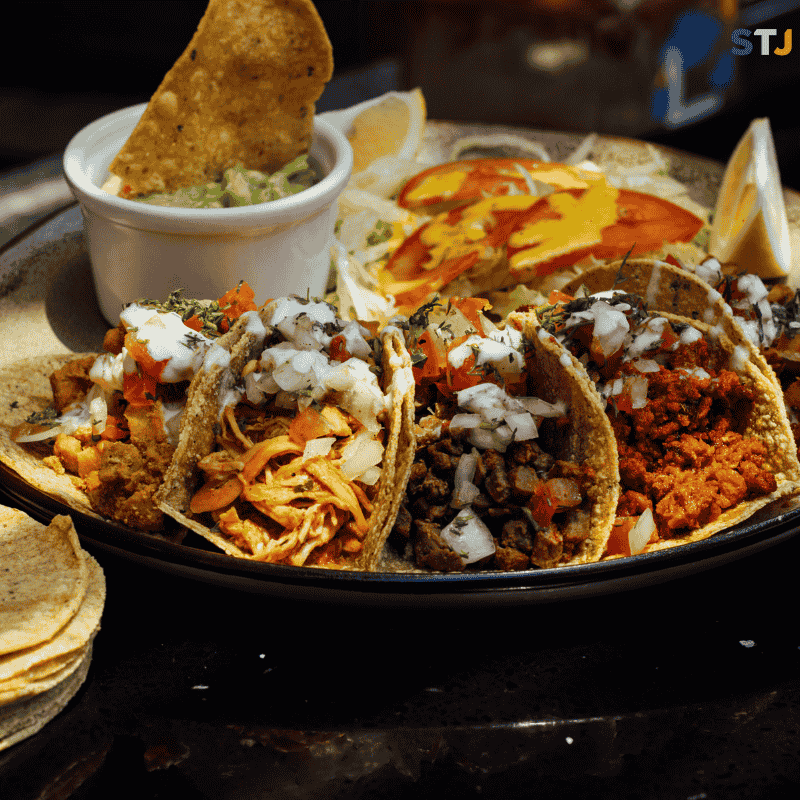
One sentence sums it all up: “… cooperation and unity. We are united by tradition and by proximity,” says Fabiola, laughing lightly as she mentions that some dishes now known worldwide were born of customers’ hunger and the ingenuity of cooks who, with ingredients they found “at random” in their kitchens, created dishes that are still with us. When I asked for examples, Fabiola cheerfully replied: “Do you know Caesar salad or nachos?”
Yes, I do know both (I think most of us know what they are), but I did not know how and where they came about. In case you would also like to know a little more, here are a few facts: Caesar salad was invented in 1924, when demand was high and ingredients scarce, by the Italian chef Caesar Cardini, who owned a restaurant in Tijuana, Baja California.
Nachos were created by the Mexican cook Ignacio “Nacho” Anaya, who in 1940 had to prepare snacks for the wives of US soldiers in Piedras Negras, Coahuila. Without enough ingredients for the snacks, he used what was to hand: fried tortilla chips (totopos), cheese and jalapeño peppers.
We all know that these dishes have travelled across borders and through time, and are as popular today as when they first appeared.
After this short history lesson, let’s come back to the present. What drives food today?
The new engine of the food lab: social media
Today’s stoves count TikTok and Instagram among their tools. This massive exposure is driving an unprecedented creative exchange: food trends no longer take months to cross the border, and trade fairs in both countries have transformed the way people buy.
“Within a week or two, we can already find products that went viral on social media in the Mexican market,” says Fabiola. “Importers are constantly following trends so they can get products onto the shelves as quickly as possible”, the specialist points out.
The result: hybrid, daring kitchens that are not afraid to experiment, curious (and sometimes impatient) consumers, constantly restocked shelves and lively competition that drives the food offer forward.
The future is already cooking
Fabiola sees a future in which ingredients will become ever more accessible, and chefs from both countries will share techniques and knowledge, forming a shared culinary identity without giving up pride in their origins. Cooperation will win out over competition, creating an ever closer symbiosis between these two great nations that love good food.
Interested in writing about travel that explores the extraordinary? Discover the Master in Travel Journalism and the Master in Gastronomic Journalism and Communication at the School of Travel Journalism.