
By Katrijn Geerts
On a quiet winter morning in Bruges, when the swans glide across the canals and the belfry bells roll softly through the narrow streets, the city feels like a secret. This is the Bruges locals love: contemplative, lived-in, textured. But by midday in high season, the atmosphere changes. Tour groups mushroom in the Markt, chocolate shops buzz, and camera shutters ricochet against the medieval facades.
Bruges, one of Europe’s most photogenic cities, is wrestling with the paradox of its own success.
A Brand Built on Timeless Beauty
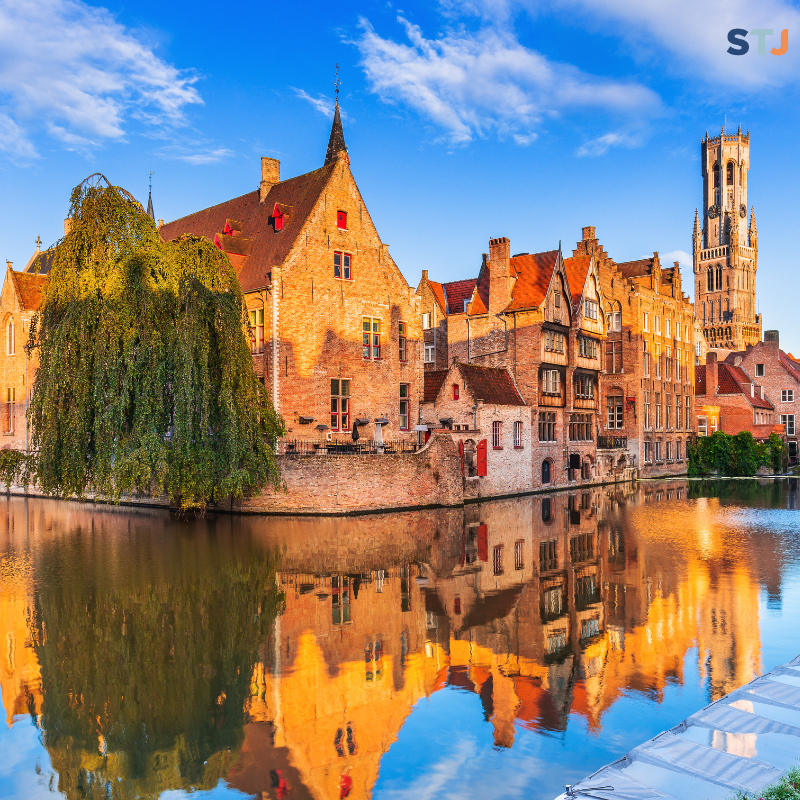
The city’s global identity was crafted long before modern marketing existed. Bruges is its brand: gabled houses, cobblestones, quiet canals and Flemish Primitives — an aesthetic so complete it borders on cinematic. For years, this visual shorthand made promotion easy. A single image could do the work of an entire campaign.
But travel tastes have evolved, and so has Bruges’ strategy. Visit Bruges, the city’s tourism board, now positions the destination as a place for “quality cultural travel” — where art, gastronomy, craftsmanship and heritage intersect. That shift from volume to value is deliberate.
“We wholeheartedly choose not for ‘more’ but for ‘better’,” the organisation says — a line that could double as the city’s new mission statement.
Instead of casting a wide marketing net, Bruges now targets discerning travellers: those who stay longer, engage deeper and wander beyond the postcard. Digital campaigns highlight ateliers, neighbourhood cafés, hidden courtyards and seasonal events curated with care. Even the tone has changed: less “bucket list,” more “slow discovery.”
The Weight of Popularity
Still, the numbers tell a different story. Around eight million visitors pass through the city each year — an extraordinary figure for a place with only about 120,000 residents. At peak times, Bruges feels like it is operating at capacity, and locals notice.
The term “overtourism” has moved from academic journals into daily conversation. Residents complain about congested footpaths, homogenised shops and the creeping feeling that they are becoming minor characters in their own city. An international paper summarised the tension bluntly: “There are just too many visitors.” Unlike some destinations that bristle at such criticism, Bruges confronts it head-on. Policy changes have been swift: tighter controls on short-term rentals, limits on cruise ship arrivals and smarter visitor-flow management. The aim is to guard the fragile equilibrium between economic benefit and everyday liveability.
Sustainability, Reimagined
Sustainability here is about more than low-impact travel. For Bruges, it includes the safeguarding of heritage, community well-being and cultural continuity. The city’s tourism strategy is explicitly tied to several UN Sustainable Development Goals, which might sound bureaucratic — until you wander into a quieter neighbourhood and see what is at stake.
There’s a growing fear that high tourism pressure could erode Bruges’ authenticity. Some long-time residents report feeling “detopographised,” as though the city they know is gradually being replaced by an idealised façade for visitors. Local identity — the subtle rhythms of daily life, from market routines to the dialect heard in bakeries — is part of the heritage Bruges is trying to save.
To counter that erosion, the city has ramped up community participation. Residents now have a louder voice in tourism planning, from event approvals to neighbourhood impact assessments. This approach is not just democratic — it’s strategic. A sustainable Bruges, the thinking goes, must first be a liveable Bruges.
Rewriting the Story
Modern destination marketing is no longer just about enticing tourists; it’s about shaping expectations. And Bruges’ evolving narrative is clear: the city invites visitors to experience it with intention. Campaigns encourage travellers to explore lesser-known quarters, choose walking or cycling, and support local artisans.
This new messaging communicates values — authenticity, respect, craftsmanship, and stewardship — that stretch far beyond simple sightseeing. It’s not scolding, but gently guiding. Think of it as a cultural code of conduct wrapped in beautiful imagery.
The Road Ahead
Cities like Bruges exist in a delicate balance: too few visitors, and the cultural ecosystem suffers; too many, and it begins to crack. The long-term health of Bruges hinges on how well it can manage that tension.
The current approach — emphasising longer stays, better distribution, and less dependence on day tourism — gives Bruges room to breathe. Whether these measures will preserve the city’s soul remains to be seen, but early signs suggest a newfound clarity of purpose.
Despite the challenges, Bruges still offers moments of magic — especially when the crowds thin and the muffled sound of footsteps echoes against centuries-old walls. That fleeting quiet may be the greatest luxury of all, and perhaps the most compelling reason for the city’s shift toward quality over quantity.
Bruges is not merely trying to protect its past. It is cautiously, but confidently, shaping its future. And in doing so, it invites travellers to rediscover what makes the city extraordinary: not just its medieval splendour, but its capacity to feel profoundly, intimately human.
This article is part of the practical work carried out by students on the Master’s Degree in Travel Journalism at the School of Travel Journalism.