
By Klára Kratochvílová
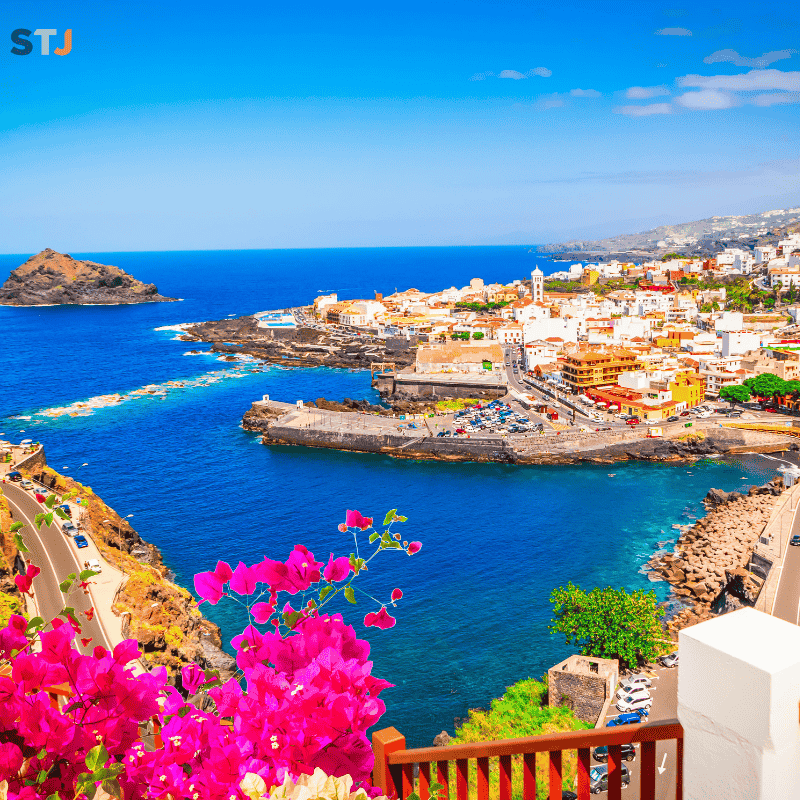
We are in the middle of the ocean, far from everything, on an island off the coast of Africa that is nonetheless part of Spain. Gran Canaria, one of the seven Canary Islands, is very different from the “traditional” Spain we know. Every year, millions of tourists travel from all over the world to enjoy its cultural and natural riches, make the most of the warm climate and, of course, enjoy the food the island has to offer. What gives Gran Canaria such a unique touch?
Talk to almost any Canarian and you quickly discover how proud they are of their culture, their origins and their local food. During my time in Las Palmas de Gran Canaria, I lost count of how many times I heard the phrase: “I’m not Spanish, I’m Canarian.” And they have a point. They are more than 1,000 km from the nearest point on the mainland and much closer to Africa than to Europe. What does this mean for Canarian food? Although it shares features with Spanish cooking, it stands apart for the ingredients it uses and, at times, for its simplicity.
Locally sourced ingredients are central to its dishes, which are typically based on fresh, local produce. Thanks to its location, the island also enjoys great biodiversity and a very distinctive volcanic agriculture. Canarian cooking is an essential part of the islands’ cultural identity, reflecting their history and the influence of Aboriginal, Spanish, African and Latin American traditions, as well as their bond with the land.
In recent years, institutional initiatives such as Saborea Gran Canaria, food fairs and promotional campaigns have raised the profile of Canarian cooking both nationally and internationally. The official website (www.grancanaria.com) offers a range of authentic recipes, and the island has numerous “Museums of Flavour”, including museums devoted to cheese, wine, rum and chorizo. Growing interest in authentic, sustainable experiences rooted in the land has driven demand for activities such as wine routes, visits to organic farms, farmers’ markets and cookery workshops. And, of course, there are plenty of restaurants.
One of them is Café Chic, in the historic quarter of Vegueta in Las Palmas de Gran Canaria: an area of cobbled streets and houses with typical Canarian balconies, full of bars and restaurants. The restaurant is run by a French couple. I chose it because I think it offers an alternative view of Canarian food: how newcomers discover it, interpret it and weave it into an international menu. Having worked there, I also know first-hand their relationship with local food and culture. The dishes are more than just food: they reflect the essence of the island.
Bintou and Didier moved to the Canaries for personal reasons and, with their long experience in food and hospitality, wanted to give local cooking an international touch. They opened Café Chic three years ago and, alongside Canarian dishes, serve recipes from Africa, France, Italy and the Americas. As the island is extremely touristy, they welcome visitors from all over the world, although most are European – mainly Germans, Scandinavians and people from northern Europe – as well as Spaniards.
Far from home, in a new country and setting, Bintou began learning Spanish and getting to know the local culture. She went to restaurants to try typical dishes and discovered new recipes online, in books, on social media and through her Canarian staff. Today she offers a perfect mix of food from around the world. The owner says that tourists tend to look for Canarian tapas and local produce, as well as more exotic, unusual food. Locals, on the other hand, are very proud, prefer traditional dishes and often reject menus with no Canarian food at all. Among the Canarian dishes Bintou prepares are octopus ropa vieja (made with chickpeas and vegetables), papas arrugadas (with red or green mojo), grilled cheese (with jam), croquettes, boards of local cheeses and a variety of pinchos. Bintou has seen a significant increase in local customers since adding these dishes to the menu.
Bintou also pays special attention to using local ingredients to guarantee authenticity and freshness. These include fish from Canarian waters, cheeses with protected designation of origin, island wines and traditional spices. This combination of local produce and international recipes not only respects Canarian culinary tradition, but also brings flavour and quality to every dish, showing how ingredients from the land can enter into dialogue with culinary influences from other countries.
If you know Vegueta, you will surely have heard of the famous Noche de Tapas. Every Thursday the streets fill with people, as almost every restaurant joins a “tapas trail”, offering a variety of tapas and pinchos at very affordable prices. In recent years, nightlife and leisure in the historic quarter have been reshaped, and the Noche de Tapas has become a weekly tradition for many locals, visitors and young people. Café Chic, like many other restaurants, also hosts live music nights, drawing new customers and turning food into an experience.
Personally, I think food culture is also closely tied to the local climate. Summer or winter, the warm evenings create the perfect atmosphere for going out, socialising, having a glass of wine or sharing some tapas. Café Chic shows how Canarian food not only defines local identity, but also inspires those who arrive from other parts of the world. The streets fill with people of different backgrounds, cultures and languages, but food is what brings us all together. By combining traditional dishes with international ideas, the restaurant reflects the essence of the island: an open, diverse place, deeply proud of its cooking.
Personal reflection:
I found it fascinating to explore the role of food in Gran Canaria and how it is promoted at an institutional level. It is a subject close to my heart, as I spent two semesters living on the island and working in restaurants. I know how important culture and food are to Canarians and how proud they are of their origins. As a foreigner who has lived there, I was particularly interested in the experience of other foreigners who run a restaurant on the island.
I noticed that many locals prefer traditional food, their own dishes, and are not always drawn to the modernisation of the restaurant sector. That is why I chose to interview Bintou: to better understand her experience and compare it with mine.
I would say the hardest part was getting in touch with her, especially as I was not on the island at the time. I also wanted to draw up a compact list of questions and spent quite a while phrasing them so they were thorough and direct while covering several topics. Because of my busy schedule and the fact that Bintou is very busy, it took us a while to find a time, and in the end we communicated through text and voice messages. That turned out to be easier for me, as we did the interview in French and the recordings let me translate her answers at my own pace.
This assignment helped me practise interviewing, improve my interpersonal communication and better understand the role of food in promoting tourism. My conversation with Bintou showed me that a balance must be struck between modernisation and tradition, and that a destination’s food offer is a direct reflection of the place itself. The tapas nights in Vegueta, the presence of local produce and the institutional initiatives show that eating in Gran Canaria is an experience that goes beyond the plate. It is a way of taking part in local life. And, in my view, that is incredibly important in a destination as touristy as Gran Canaria.
Interested in writing about travel that explores the extraordinary? Discover the Master in Travel Journalism and the Master in Gastronomic Journalism and Communication at the School of Travel Journalism.